India's influencer marketing industry is on track to hit ₹3,375 crore in 2026, and a new kind of creator is quietly reshaping how brands think about campaigns. They don't sleep. They don't cancel shoots. They don't get into controversies. And they are becoming increasingly hard to tell apart from real people.
Meet India's AI and virtual influencers and the very real question every brand marketer needs to answer in 2026: should you be working with one?
What Exactly Is a Virtual Influencer?
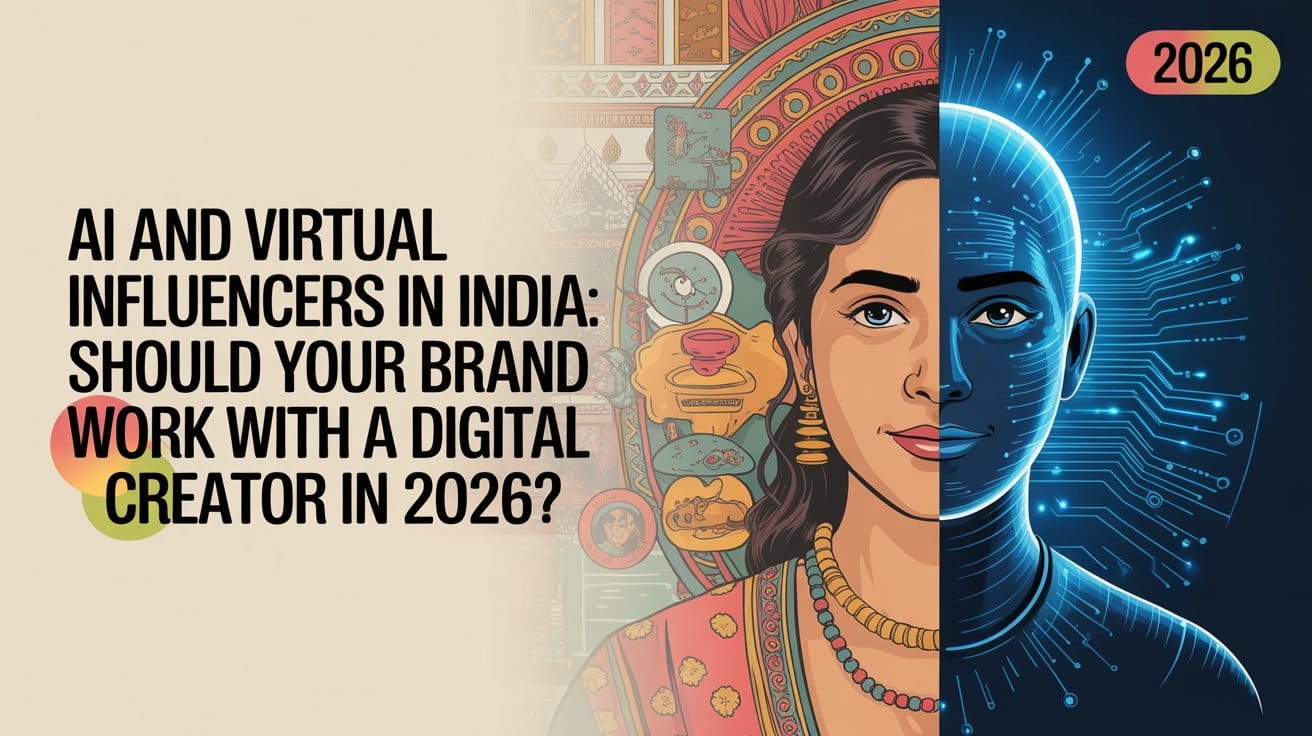
A virtual influencer is a computer-generated (CGI) personality that exists entirely in the digital world. They post on Instagram, create Reels, collaborate with brands, engage with followers through comments and DMs, and do all of it without ever actually being alive.
The concept is not new globally. Lil Miquela, a US-based AI influencer, has amassed over 2.5 million followers and worked with brands like Prada and Calvin Klein. But India now has its own homegrown players, and they are gaining serious traction.
India's Virtual Influencer Scene in 2026
Kyra is the name that started it all. Created by FUTR Studios and launched in 2022, Kyra became India's first virtual influencer, a "forever 21-year-old" lifestyle creator based in Mumbai. She has appeared on the digital cover of Travel + Leisure India, collaborated with boAt (whose debut campaign clocked over 20 lakh Instagram views), Amazon Prime Video, L'Oréal, WOW Skin Science, and John Jacobs. She even pitched on Shark Tank India. As of 2026, she has crossed 250,000 followers on Instagram.
Naina, created by Avtr Meta Labs, has built a reputation for elegant fashion storytelling and has appeared at real-world events and alongside actual celebrities, deliberately blurring the line between virtual and physical.
Radhika Subramaniam, India's first bilingual (Tamil-English) AI travel influencer, targets Gen Z audiences with perpetual-vacation content, forever on holiday, always accessible, never requiring a visa.
These are not novelty acts. They are becoming mainstream brand assets.
Why Brands Are Taking AI Influencers Seriously
The appeal for brands is practical and measurable. Here is why AI influencers are gaining real marketing budgets in 2026:
Complete brand control. A virtual influencer's look, tone, captions, and campaign messaging are entirely in the brand's hands. No off-script moments, no personal opinions leaking into your campaign.
Zero controversy risk. Human influencers carry human risk. Personal scandals, political statements, or audience backlash can derail a campaign overnight. Virtual influencers simply do not have that problem.
Always-on availability. A digital creator can post at 2 AM during a flash sale, appear across time zones simultaneously, and maintain a consistent content cadence without burnout, schedule conflicts, or illness.
Stronger ROI signal. Brands using AI for influencer selection and execution have reported campaign ROI improvements of up to 30%, largely because virtual creators guarantee active, engaged followers rather than inflated counts.
Novelty-driven engagement. When audiences are unsure whether a creator is real, they engage to find out. Kyra's early campaigns with boAt benefited enormously from this curiosity factor.
The Honest Limitations You Should Know
Virtual influencers are not a universal solution. There are genuine challenges brands must weigh before committing budget.
Authenticity concerns. Audiences, particularly in India's Tier 2 and Tier 3 markets, place enormous weight on personal trust and relatability. A CGI persona, however polished, cannot share a lived experience. For categories built on genuine emotion (mental health, real food, grassroots causes), a virtual creator can feel hollow.
ASCI disclosure obligations. Under India's 2026 advertising guidelines, brands are required to clearly disclose AI-generated content in campaigns. Failing to do so creates regulatory and reputational risk.
Limited contextual depth. Kyra speaks in breezy Hinglish and occupies a pan-Indian aspirational aesthetic, which makes her broadly appealing but sometimes culturally thin. Regional nuance, vernacular authenticity, and hyperlocal trust still belong to human creators.
Production costs are real. Commissioning a quality virtual influencer campaign, particularly video, is not cheap. The economics work best at scale or for brands in technology, gaming, fashion, fintech, and beauty, where futuristic aesthetics align naturally with the message.
Which Industries Should Consider It in 2026?
Based on what is working in the Indian market right now, virtual influencer campaigns are delivering the strongest results in:
- Consumer electronics and tech (Kyra × boAt is the benchmark case)
- OTT and gaming (Amazon Prime's sci-fi content fit perfectly with a virtual persona)
- Fashion and beauty (Zara, Naina, and other AI creators dominate editorial aesthetics)
- Fintech and banking (AI brand ambassadors align with innovation positioning)
- Fitness and wellness (virtual creators like Rudra target India's fitness-conscious youth)
Human Influencers vs Virtual Influencers: A Quick Decision Guide
The smart answer in 2026 is not either/or but how to use both strategically.
How Fame Keeda Approaches This Shift
At Fame Keeda influencer marketing, we believe the future is hybrid. Human creators bring irreplaceable cultural depth, community trust, and regional relevance, especially across India's rapidly growing Tier 2 and Tier 3 audiences. Virtual influencers bring consistency, creative control, and novelty at scale.
The brands winning in 2026 are those who use Fame Keeda's network of 1 million+ real influencers for authentic, community-driven storytelling and selectively layer in virtual creator campaigns where the brand narrative calls for a futuristic or innovation-first positioning.
Whether you are a D2C brand exploring barter collaborations, a tech company planning a product launch, or a consumer brand building a long-term ambassador strategy, the question is no longer "should we look at AI influencers?" it is "where do they fit in our overall creator mix?"
The Bottom Line
Virtual influencers in India have crossed the novelty threshold. Kyra, Naina, Radhika, and their peers are working with real brands, driving real engagement, and generating measurable campaign results. For brands in the right categories, ignoring them in 2026 means leaving a genuinely differentiated creative tool on the table.
But they are a complement to the human creator strategy, not a replacement for it. The brands that will lead this year are the ones that understand that distinction clearly.
Looking to build an influencer strategy that combines the best of human creativity and AI-powered innovation? Connect with the Fame Keeda influencer marketing team to plan your next campaign.