Brands today are investing heavily in content.
But there is a critical question most marketers struggle with.
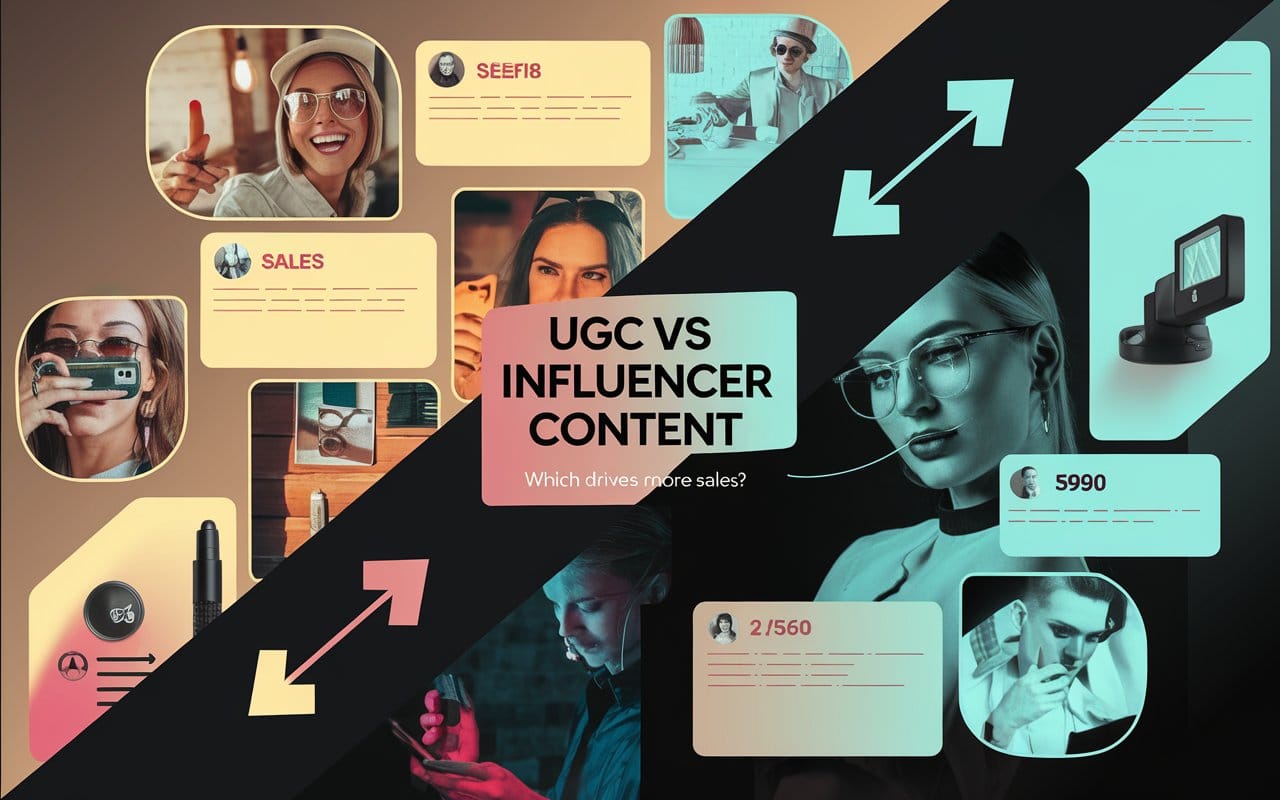
Should you focus on UGC or influencer content?
Both look similar on the surface. Both involve real people. Both feel authentic.
But when it comes to sales, the difference is significant.
Choosing the wrong approach can cost you conversions. Choosing the right mix can multiply your revenue.
This guide breaks down what actually works, what drives sales, and how to use both strategically.
What is UGC (User-Generated Content)
UGC is content created by real customers who have used your product or service.
It includes:
- Reviews and testimonials
- Customer photos and videos
- Unboxing experiences
- Organic social media posts
UGC is not paid promotion. It is driven by real experience.
🔹 Insight: UGC builds trust because it is perceived as unbiased.
What is Influencer Content
Influencer content is created by creators with an audience.
It is usually:
- Sponsored or collaborative
- Strategically planned
- Designed for reach and engagement
Influencers act as a bridge between brands and audiences.
🔹 Insight: Influencer content builds awareness and drives intent.
The Core Difference
| Factor | UGC | Influencer Content |
|---|---|---|
| Source | Customers | Creators |
| Trust Level | Very high | High |
| Reach | Limited | High |
| Cost | Low | Medium to high |
| Control | Low | High |
| Scalability | Limited | High |
Which One Drives More Sales
The answer is not straightforward.
It depends on where your customer is in the buying journey.
UGC Drives Conversions
UGC works best at the decision stage.
Why?
Because people trust other customers more than brands or influencers.
Examples:
- Reviews on product pages
- Customer testimonials
- Before-after results
This type of content removes hesitation.
Influencer Content Drives Discovery
Influencer content works best at the awareness stage.
It:
- Introduces your brand
- Creates interest
- Drives traffic
Without this, UGC may never be seen.
A Simple Funnel That Explains Everything
| Funnel Stage | Best Content Type | Goal |
|---|---|---|
| Awareness | Influencer content | Reach new audience |
| Consideration | Influencer + UGC | Build trust |
| Conversion | UGC | Drive sales |
| Retention | UGC | Strengthen loyalty |
🔹 Insight: Influencers bring people in. UGC converts them.
Real-World Scenario
Imagine you are launching a skincare product.
Step 1: Influencers create reels showcasing the product
Step 2: Audience visits your website
Step 3: They see real customer reviews and testimonials
Step 4: They make a purchase
Without influencers, no traffic. Without UGC, no trust.
Performance Comparison
| Metric | UGC | Influencer Content |
|---|---|---|
| Engagement | High | High |
| Trust | Very high | High |
| Conversion Rate | Higher | Moderate |
| Reach | Low | High |
| Cost Efficiency | Very high | Medium |
When to Use UGC
Use UGC when your goal is:
- Increasing conversions
- Building credibility
- Reducing purchase hesitation
- Improving product page performance
When to Use Influencer Content
Use influencer content when your goal is:
- Launching a product
- Entering new markets
- Increasing brand awareness
- Driving traffic
The Most Powerful Strategy. Combine Both
This is where most brands miss out.
They choose one over the other.
The real growth comes from combining both.
The Hybrid Strategy
- Use influencers to create high-quality content
- Convert that content into ads
- Encourage customers to create UGC
- Use UGC on landing pages and retargeting
This creates a complete sales system.
Advanced Strategy for 2026
Turn influencer content into UGC-style ads.
What this means:
- Avoid overly polished content
- Make it feel natural and relatable
- Focus on storytelling
Result:
- Higher engagement
- Better conversions
- Lower ad costs
🔹 Insight: The best performing ads look like UGC, even when created by influencers.
Common Mistakes Brands Make
- Treating UGC and influencer content as the same
- Using only influencer campaigns without UGC
- Ignoring customer reviews
- Over-polishing influencer content
- Not repurposing content into ads
How to Measure What Works
Track metrics based on content type.
For UGC:
- Conversion rate
- Add-to-cart rate
- Customer trust signals
For influencer content:
- Reach
- Engagement
- Traffic
🔹 Pro Tip: Measure them separately but optimize them together.
A Quick Decision Framework
If you are confused, use this:
- Need reach? Use influencer content
- Need trust? Use UGC
- Need sales? Use both
FAQs
Is UGC better than influencer marketing?
UGC is better for conversions, while influencer marketing is better for awareness.
Can small brands rely only on UGC?
Yes, but growth will be slower without influencer-driven reach.
Which is more cost-effective?
UGC is more cost-effective, but influencer content scales faster.
Can influencer content feel like UGC?
Yes, and that is the most effective approach today.
Conclusion
UGC vs influencer content is not a competition.
It is a system.
One drives attention. The other drives action.
Brands that understand this build stronger funnels, better campaigns, and higher revenue.
🚀 Build a High-Converting Content Strategy with Influencers and UGC
Most brands either focus only on influencers or rely only on customer content. That is why they struggle to scale.
Fame Keeda helps brands design influencer strategies that not only drive reach but also generate UGC that converts.
From sourcing the right creators and producing relatable content to repurposing it into performance ads and building conversion-focused funnels, every step is designed to maximize sales.
If your campaigns are getting views but not conversions, the gap is in your content strategy.
👉 Start building a system where influencer content and UGC work together to drive real business growth.