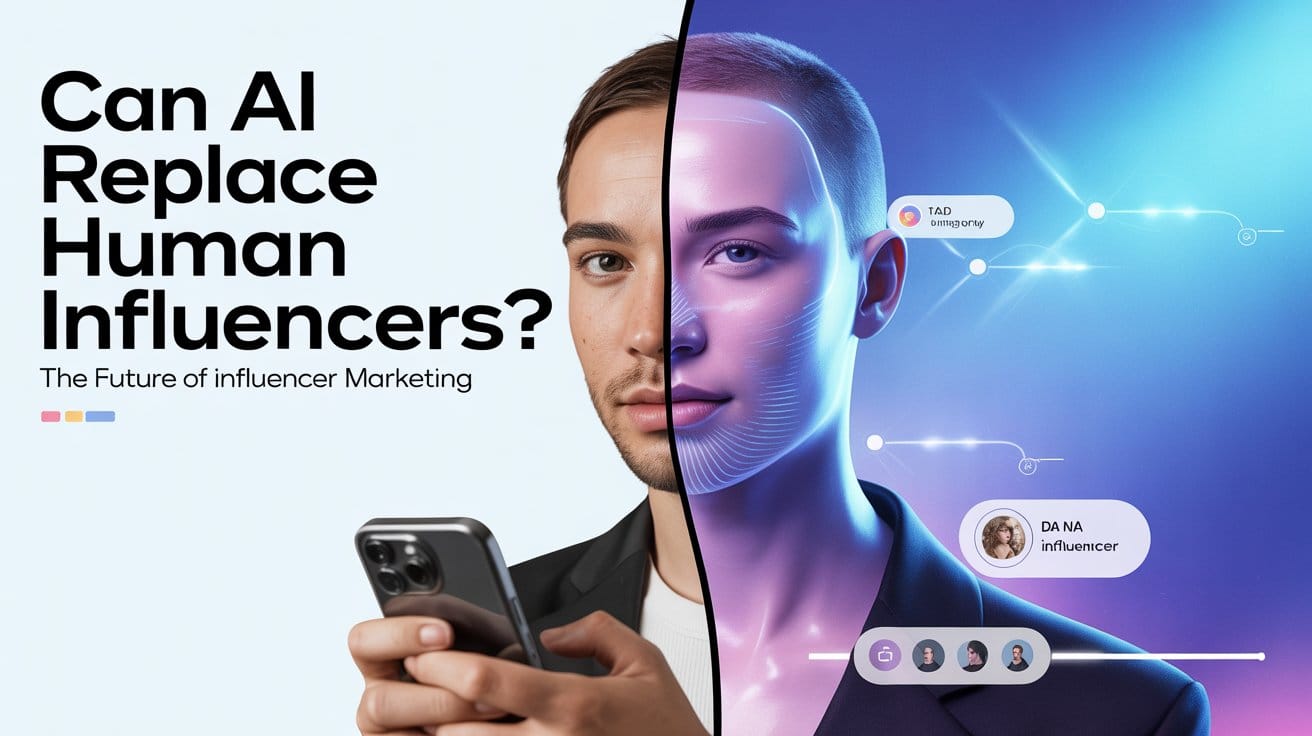
Artificial Intelligence is transforming every corner of digital marketing, and influencer marketing is no exception. Over the last few years, AI-generated influencers like Lil Miquela and virtual creators on Instagram and TikTok have gained millions of followers. Brands are now experimenting with AI-powered personalities for promotions, campaigns, and audience engagement.
But this raises an important question: Can AI truly replace human influencers?
The short answer is not completely. While AI influencers are becoming more advanced, human influencers still bring authenticity, emotions, and trust that technology cannot fully replicate. Let’s explore how AI is changing influencer marketing and whether virtual creators can truly take over the industry.
What Are AI Influencers?
AI influencers are computer-generated digital personalities created using artificial intelligence, CGI, and animation technologies. These virtual influencers look and behave like real humans. They post on social media, collaborate with brands, and even interact with followers.
Some AI influencers are designed to resemble fashion models, gamers, fitness creators, or lifestyle vloggers. Brands use them because they offer complete creative control and consistency.
Popular AI influencers include:
- Lil Miquela
- Imma
- Shudu Gram
- Noonoouri
These digital personalities have collaborated with global fashion, beauty, and tech brands.
Why Brands Are Interested in AI Influencers
1. Full Creative Control
Unlike human creators, AI influencers do not have mood swings, scheduling conflicts, or reputation risks. Brands can control every detail, including appearance, messaging, and campaign style.
This makes AI influencers attractive for long-term branding campaigns.
2. Cost-Effective Campaigns
Hiring celebrity influencers can be expensive. AI creators can reduce recurring costs over time because they do not require travel, accommodation, or personal management.
For brands running multiple campaigns, AI influencers can become a scalable marketing solution.
3. 24/7 Availability
AI influencers can generate content continuously without breaks. They can instantly adapt to trends, launch campaigns globally, and engage audiences across different time zones.
4. Consistent Brand Image
Human influencers may sometimes create controversies or post content that damages brand reputation. AI influencers eliminate much of that unpredictability.
Brands can maintain a carefully curated image without unexpected public issues.
Why Human Influencers Still Matter
Despite AI advancements, human influencers continue to dominate social media marketing. The reason is simple: people connect emotionally with real humans.
1. Authenticity Builds Trust
Audiences trust creators who share genuine experiences, opinions, and emotions. Human influencers create relatable content because they have real-life stories, struggles, and personalities.
AI-generated content can feel polished, but it often lacks emotional depth.
2. Human Experiences Cannot Be Replicated
Travel vlogs, fitness journeys, skincare transformations, parenting advice, and lifestyle content work because audiences connect with personal experiences.
AI may imitate emotions, but it cannot truly experience life.
3. Community Engagement
Successful influencers build communities, not just audiences. Followers interact because they feel connected to the creator’s personality and values.
Human creators can respond naturally, improvise conversations, and understand emotions in ways AI still struggles to replicate.
4. Cultural Understanding
Human influencers understand local culture, humor, slang, and trends naturally. AI systems still face challenges in understanding cultural sensitivity and emotional context.
This is especially important in diverse markets like India.
The Future: AI + Human Collaboration
Instead of replacing human influencers, AI is more likely to support and enhance influencer marketing.
Many creators already use AI tools for:
- Content editing
- Caption generation
- Video scripting
- Audience analytics
- Trend prediction
- Automated responses
Brands may increasingly use hybrid campaigns where human influencers collaborate with AI-generated experiences.
For example:
- Virtual fashion try-ons
- AI-generated product demos
- Personalized influencer recommendations
- AI-powered live interactions
The future of influencer marketing will likely combine human creativity with AI efficiency.
Industries Where AI Influencers May Grow Faster
AI influencers are especially effective in industries where visual perfection and futuristic branding matter:
- Fashion
- Beauty
- Gaming
- Technology
- Luxury brands
- Metaverse projects
However, industries requiring trust and emotional credibility, such as healthcare, parenting, education, and motivational content, will continue relying heavily on human creators.
Challenges of AI Influencers
AI influencers also come with concerns:
- Lack of transparency
- Ethical issues
- Fake engagement concerns
- Unrealistic beauty standards
- Reduced emotional connection
Consumers are becoming more aware of authenticity. If audiences feel manipulated, trust can decline quickly.
Brands must use AI responsibly and disclose virtual creators clearly.
Final Thoughts
AI is undoubtedly reshaping influencer marketing, but human influencers are far from obsolete. Technology can create visually impressive digital personalities, but it cannot fully replace human emotion, trust, creativity, and real-life experiences.
The future of influencer marketing is not about AI versus humans. It’s about finding the right balance between automation and authenticity.
Brands that successfully combine AI innovation with genuine human storytelling will have the strongest impact in the evolving digital landscape.
CTA
Want to build powerful influencer campaigns that combine creativity, authenticity, and the latest digital trends? Partner with Fame Keeda to connect with top influencers, create viral campaigns, and grow your brand visibility across Instagram, YouTube, and emerging platforms.