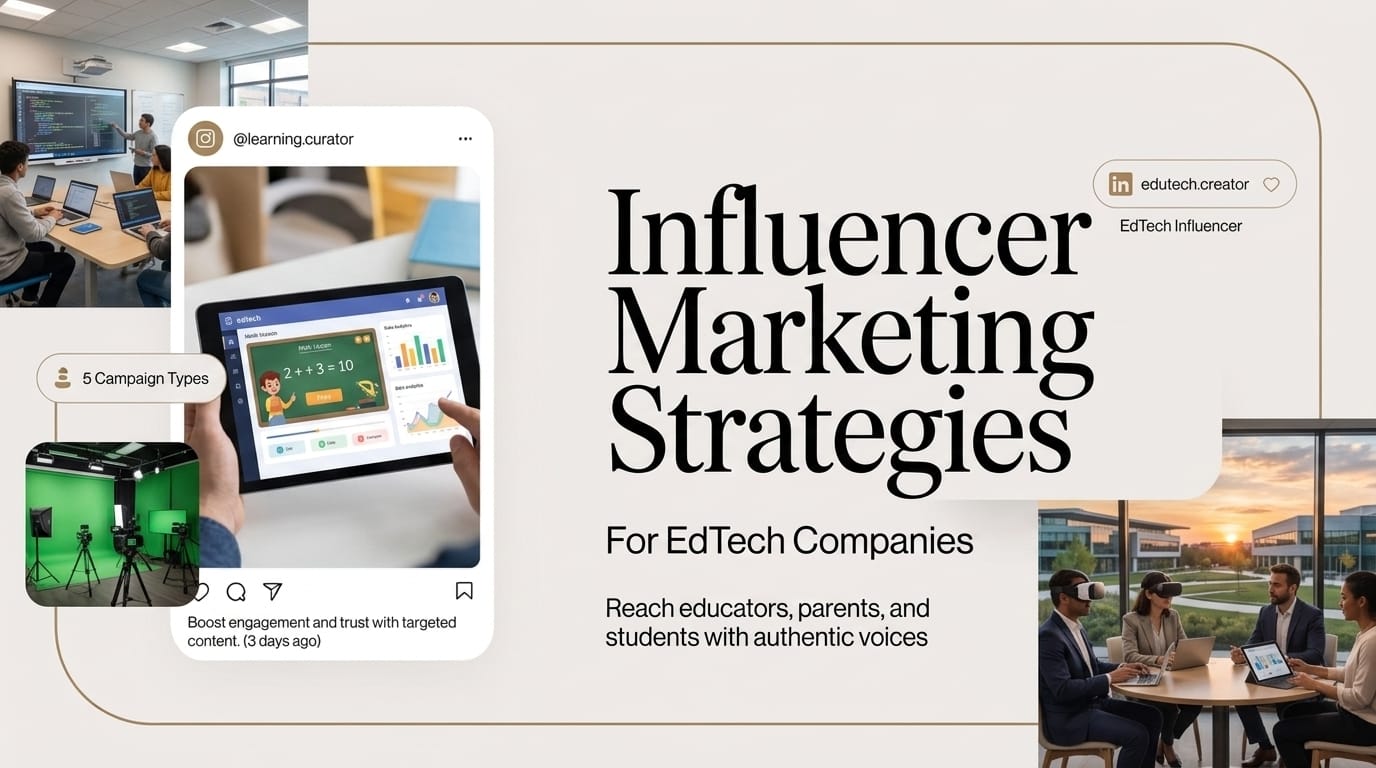
The EdTech industry in India is growing rapidly, and competition is becoming stronger every day. From online learning apps and coding platforms to language-learning tools and upskilling courses, every EdTech brand wants attention from students, parents, and working professionals. Traditional ads alone are no longer enough to build trust. This is where influencer marketing becomes a game-changer.
Influencer marketing helps EdTech companies connect with their audience in a relatable and authentic way. Students trust creators they follow on Instagram, YouTube, and LinkedIn more than direct advertisements. By collaborating with the right influencers, EdTech brands can increase awareness, improve credibility, and generate high-quality leads.
Here are some of the most effective influencer marketing strategies for EdTech companies.
1. Collaborate with Educational Content Creators
The best strategy for EdTech companies is partnering with creators who already share educational content. These influencers have an audience genuinely interested in learning, exams, career growth, or productivity.
For example, creators who make videos on:
- Study tips
- UPSC/JEE/NEET preparation
- Coding tutorials
- Career guidance
- English speaking
- Productivity hacks
These influencers already have strong trust among students and learners. When they recommend an EdTech platform, the audience is more likely to try it.
Instead of choosing influencers only based on follower count, focus on engagement and audience relevance.
2. Use YouTube for Detailed Reviews and Tutorials
YouTube is one of the most powerful platforms for EdTech marketing because learning content performs extremely well there. Long-form videos allow influencers to explain the features and benefits of your platform in detail.
Popular content formats include:
- App reviews
- “Day in the Life” study videos
- Course walkthroughs
- Live classes
- Tutorial sessions
- Exam preparation strategies
When influencers demonstrate how your platform actually helps students, it creates stronger trust and improves conversion rates.
3. Leverage Micro-Influencers for Better Engagement
Many EdTech brands focus only on celebrities or large creators, but micro-influencers often deliver better engagement and more authentic communication.
Micro-influencers usually have:
- Highly loyal followers
- Better audience interaction
- Affordable collaboration rates
- Strong niche authority
For EdTech brands targeting specific exams or industries, micro-creators can provide excellent ROI. A coding educator with 20K followers may generate better leads than a celebrity influencer with millions of followers.
4. Create Student Success Campaigns
One of the strongest marketing tools for EdTech brands is real student success stories. Collaborate with influencers or students who have genuinely benefited from your platform.
You can create campaigns around:
- Exam success stories
- Job placement journeys
- Skill transformation
- Before-and-after learning experiences
Authentic storytelling builds emotional connection and motivates new users to trust your platform.
5. Run Instagram Reels and Short Video Campaigns
Short-form content is dominating social media platforms. Instagram Reels and YouTube Shorts help EdTech brands reach younger audiences quickly.
Create engaging short videos such as:
- Quick study hacks
- Productivity tips
- Educational myths
- Career advice
- “Did You Know?” facts
- Motivational student content
These videos can go viral and significantly improve brand visibility. Influencers can make the content feel natural instead of promotional.
6. Focus on Regional Language Influencers
India’s EdTech market is not limited to English-speaking audiences anymore. Regional creators are growing rapidly across platforms like Instagram and YouTube.
Collaborating with influencers who create content in:
- Hindi
- Marathi
- Tamil
- Telugu
- Bengali
- Kannada
can help EdTech companies expand into Tier 2 and Tier 3 cities. Regional content feels more relatable and increases audience trust.
7. Use LinkedIn Influencers for Professional Courses
If your EdTech company offers professional courses, certifications, or upskilling programs, LinkedIn influencer marketing can be highly effective.
Partner with:
- Industry experts
- HR professionals
- Career coaches
- Startup founders
- Tech professionals
These creators can promote courses related to:
- Digital marketing
- Data analytics
- AI and tech
- Leadership
- Business skills
LinkedIn audiences are career-focused, making them ideal for premium EdTech offerings.
8. Track Performance and Optimize Campaigns
Influencer marketing should always be data-driven. EdTech brands must track campaign performance carefully.
Key metrics include:
- Website traffic
- App installs
- Lead generation
- Course enrollments
- Engagement rate
- Watch time
- Conversion rate
Using unique coupon codes, tracking links, and performance analytics helps identify which influencers generate the best results.
9. Build Long-Term Influencer Partnerships
Instead of one-time collaborations, EdTech companies should focus on long-term influencer relationships. Consistent promotion builds familiarity and trust.
When audiences repeatedly see a creator using or recommending the same platform, the brand feels more authentic and reliable.
Long-term campaigns also help influencers better understand your platform, leading to more natural content creation.
Conclusion
Influencer marketing has become one of the most effective growth strategies for EdTech companies. Students and professionals today trust creators who educate, inspire, and guide them online. By collaborating with the right influencers, creating authentic content, and focusing on audience relevance, EdTech brands can build strong credibility and drive real business growth.
Whether it’s through YouTube tutorials, Instagram Reels, LinkedIn thought leaders, or regional creators, influencer marketing can help EdTech companies connect with learners in a more meaningful way.
CTA
Want to grow your EdTech brand with powerful influencer marketing campaigns? Partner with Fame Keeda to connect with top educational creators, increase student engagement, and drive high-quality enrollments through result-driven influencer strategies.