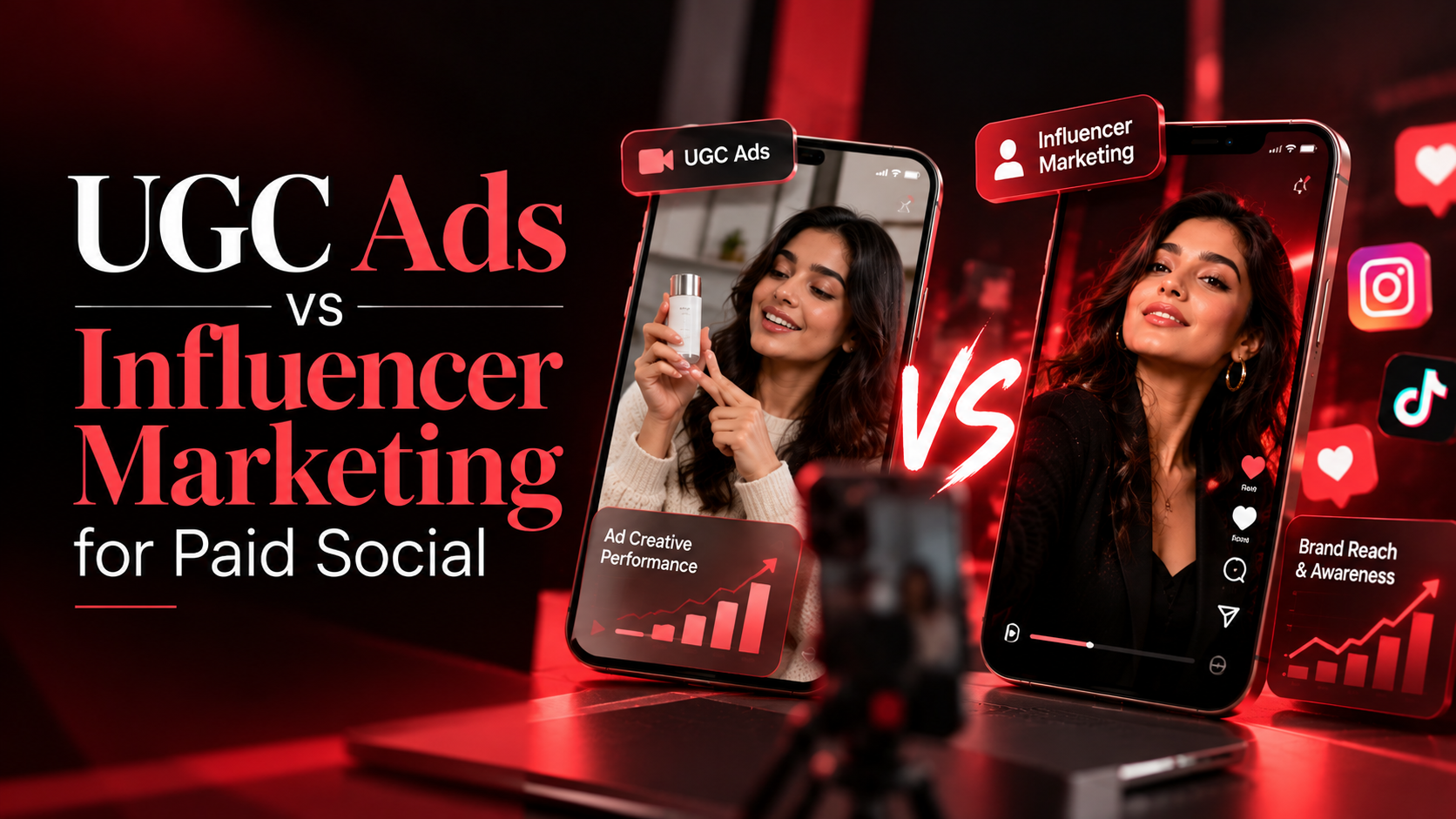
The wrong choice here costs you money. Choose UGC when you should choose influencer marketing, and you'll build awareness without driving conversions. Choose influencer marketing when you should choose UGC, and you'll hemorrhage budget on expensive reach you don't need.
Yet most brands treat these as interchangeable. They're not. One excels at driving direct sales. The other builds trust and audience reach. Understanding the difference—and knowing when to deploy each—separates brands that spend efficiently from those that waste millions on misaligned strategies.
Here's the decision framework every brand running paid social in India needs.
What Actually Separates These Two Strategies
UGC ads are videos that look like they were created by real customers, not your brand. You brief a creator, they film it, you own it completely, and you run it from your own ad account. You own the content. You control everything. You pay a flat fee per video, typically ₹3,000 to ₹10,000 in India depending on creator experience.
Influencer marketing means paying a creator to post content to their existing audience. They hold the audience relationship. Their followers see the content on their feed. You're paying for reach to their existing community. A single influencer post costs ₹25,000 to ₹5,00,000+ depending on follower count and engagement rates.
The fundamental difference: with UGC you buy an asset. With influencer marketing you buy access to an audience.
Why UGC Dominates Paid Advertising
UGC ads generate 4x higher click-through rates compared to traditional brand ads. They convert at 3-6% on average, compared to 1-3% for traditional brand ads. This happens because viewers don't realize they're watching an advertisement. The content reads as organic social, not marketing.
On paid social platforms like Meta and TikTok, UGC delivers measurable results quickly. You can produce 10-50 UGC videos from different creators, test multiple hooks, angles, and emotional triggers simultaneously, and identify winners in weeks. When a UGC ad works, you know exactly why. The data reveals which hook landed, which pain point resonated, which format converted.
You can then scale that winning UGC ad across Meta and TikTok with clear ROAS targets and predictable performance. This is how performance marketing works. Volume plus measurement plus iteration equals scale.
For Indian D2C brands, UGC ads consistently outperform branded ads by 20-50% in conversion rate, particularly for first-time buyers. The economics are compelling. UGC ads cost up to 80% lower CPM compared to traditional video ads, meaning you reach more people at lower cost while converting at higher rates.
Why Influencer Marketing Excels at Awareness
Influencer marketing can't compete with UGC on direct response metrics. An influencer post doesn't convert the way a UGC ad optimized for conversions does. But that's not its job.
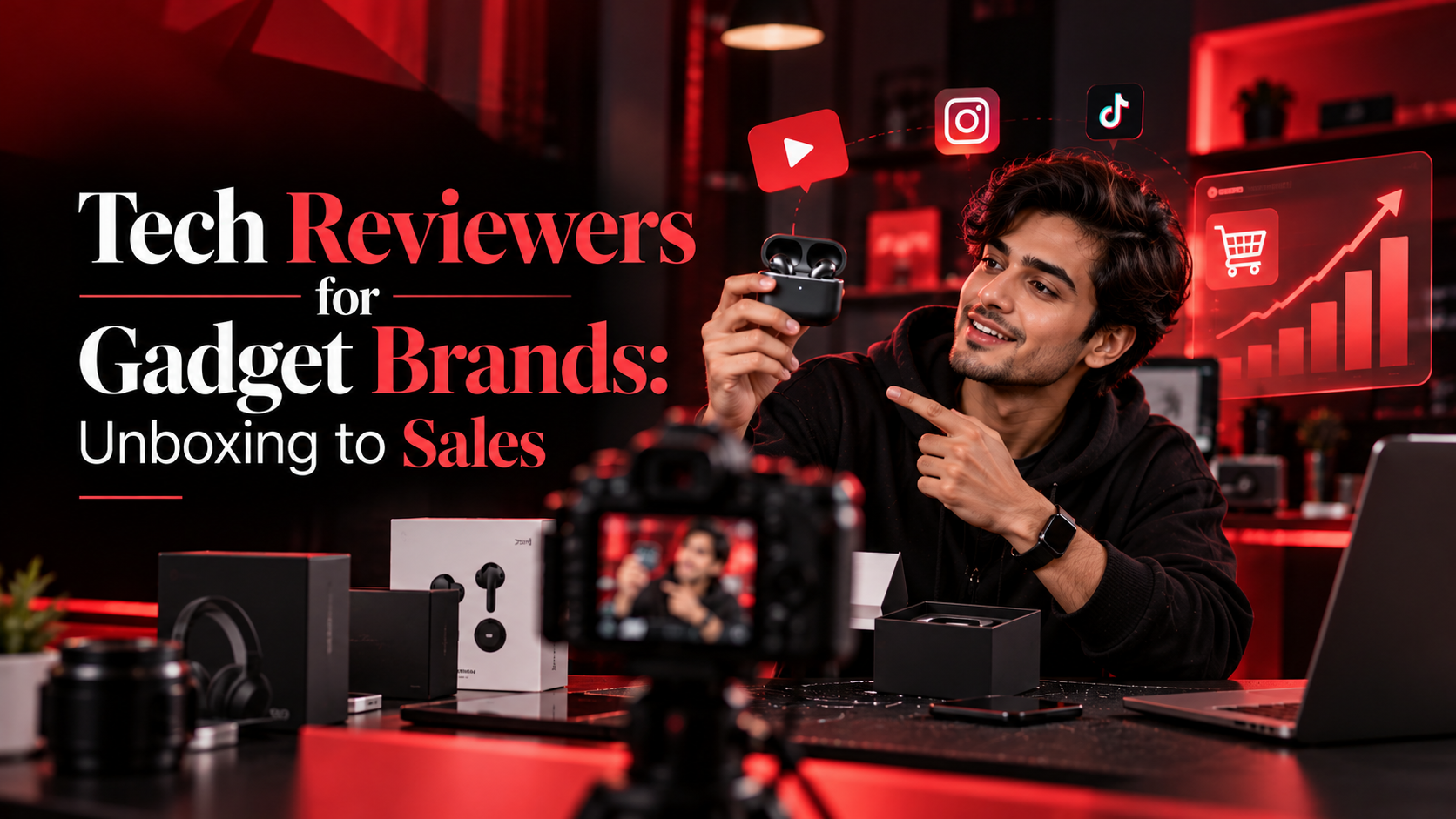
Influencer marketing builds awareness. It transfers trust from the creator to your brand. When someone sees a product endorsed by a creator they follow and trust, they notice. They engage. They discuss it with friends. They develop awareness of your brand before they ever consider purchasing.
According to industry data, 92% of marketers report getting better reach from influencer-sponsored posts than organic content. Influencers help you reach new audiences you couldn't access without them. They provide social proof that your product is worth considering.
Influencer marketing creates the top-of-funnel awareness that makes bottom-funnel paid ads work better. People who have already heard about your product from a trusted creator are far more likely to convert when they later see a UGC ad retargeted to them.
The Hybrid Strategy That Actually Works
The most effective approach for most Indian D2C brands is what industry leaders call "hook with influencer, convert with UGC."
Phase one: launch an awareness campaign with relevant influencers. They post to their audiences about your product. Cost is high, direct conversions are low, but awareness builds.
Phase two: track who engaged with influencer content using your retargeting pixel. Build a custom audience of people who already know about you.
Phase three: run UGC ads targeted to this warm audience. These viewers already have brand awareness from the influencer. Now the UGC ad removes final objections and drives conversion.
Phase four: use high-performing influencer content as raw material for UGC-style ads (with full paid ads rights included in the original deal). This "aspirational UGC" bridges both worlds.
For brands with product-market fit needing awareness scale, influencer marketing accelerates growth. But without conversion assets behind that awareness, you're building a leaky funnel. Pair awareness with UGC ads and you have a system.
Measuring Success Differently
These strategies measure success on different metrics. Don't confuse the two.
UGC ROI shows up in paid social metrics: click-through rate, cost per acquisition, ROAS, conversion rate. These are direct response numbers. Track them by the hour. Optimize aggressively.
Influencer ROI leans on reach, engagement, impressions, and brand lift. These are awareness metrics. Measure them over weeks, not days. Track sentiment shift and branded search volume.
The India-Specific Numbers
An Indian D2C brand selling products in the ₹500 to ₹2,000 range will typically see higher ROAS from UGC ads than pure influencer campaigns. UGC addresses the consideration and conversion stages. Influencers address awareness. Both matter. The sequence matters more.
Most brands benefit from allocating 60-70% of paid budget to UGC ads in performance accounts, while maintaining 20-30% allocation to influencer partnerships for ongoing awareness. The remaining budget tests new creators and platforms.
The Decision Framework
Run UGC ads if your primary goal is sales at a target ROAS you can scale on Meta and TikTok. Run influencer marketing if you're launching a new product, entering new markets, or need to reach audiences you don't currently access. Run both if you want a system that builds awareness and converts it into sales.
Don't treat them as competing options. Treat them as complementary tools in a complete funnel.
Building paid social strategies that combine awareness and conversion requires more than choosing between UGC and influencers. It requires understanding audience journey mapping, creative strategy for each funnel stage, and measurement architecture that ties both channels to revenue. Fame Keeda works with brands to design integrated campaigns that use influencers for awareness reach, UGC for conversion efficiency, and measured attribution to understand which partnerships drive actual business results. Whether you're scaling existing campaigns or building from zero, the right channel mix multiplies your paid social ROI.