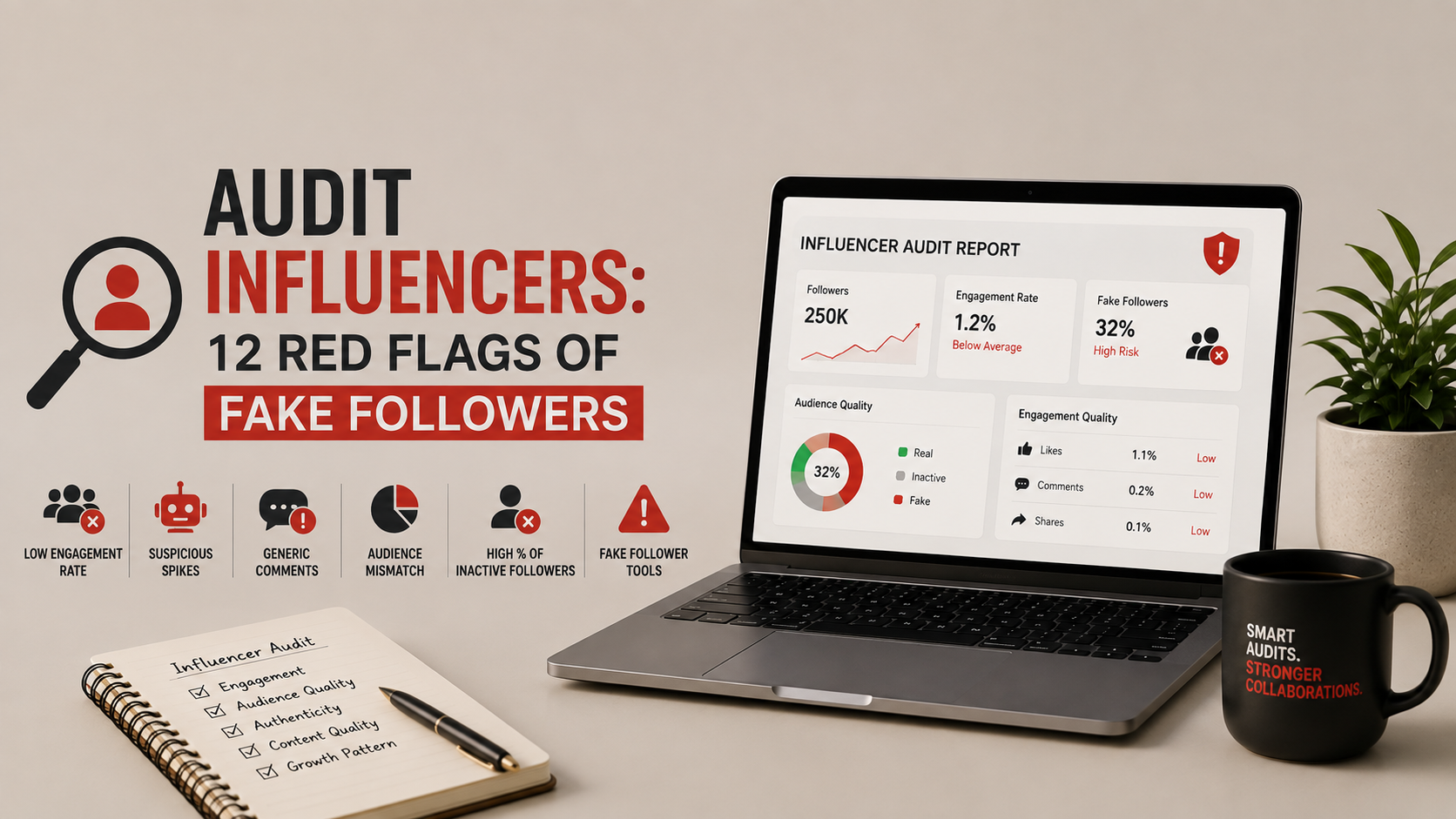
You're about to pay an influencer ₹4,15,000 for a campaign. Their follower count looks impressive. Their engagement seems solid. But what if 40% of their audience consists of bots?
According to a global audit by HypeAuditor spanning 8.7 million influencer profiles across 12 platforms, fraudulent account activity had climbed to 41.3%, with AI-generated bot networks accounting for 58% of all detected fraud cases. The problem isn't niche anymore. 81% of marketing professionals encountered influencer fraud within the past 12 months, with affected campaigns reporting a median budget waste of $128,000 per mid-scale program.
For brands in India working with influencers, the stakes are higher. A 2024 ASCI study of India's top 100 digital influencers found that 69% had failed to provide proper disclosures for brand endorsements. Beyond compliance risks, fake engagement directly impacts your ROI. You need to audit before you commit.
What Actually Is Influencer Fraud?
Influencer fraud is the deliberate inflation of reach or engagement to appear more influential than reality, including purchased followers, bot-driven likes, comment pods, and AI-generated engagement.
This breaks down into three main tactics. First, purchased followers from bot networks that inflate account size but deliver no real audience. Second, automated engagement through bots or coordinated pods that artificially boost like and comment metrics. Third, AI-generated comments that now sound natural but carry no genuine interest.
The 12 Red Flags: What to Look For
1. Suspicious Follower Growth Spikes
Real growth happens gradually. If an influencer has bought fake followers, follower growth charts typically show a clear spike followed by a flat or declining period with no sustained organic activity. Use Social Blade to review 6-12 months of growth. Flag any spike exceeding 15% within a 7-day window without a viral post or press event.
2. Mismatched Like-to-Comment Ratios
A micro-influencer receiving 3,000 likes and 4 comments on a typical post has an unusual ratio, suggesting like-buying or pod engagement. Micro-influencers typically see 1-5% engagement rates. Anything above 10% warrants scrutiny. Compare the ratio across their last 5-10 posts for consistency.
3. Generic, Templated Comments
Generic comments ("Nice!") or emoji-only responses from accounts with no profile photos or posts are strong indicators. Spend five minutes reading through comments. Real followers mention details from the post. Bots use phrases like "Great post!" across completely different content types.
4. Bot-Like Timing Patterns
Bots work on schedules. If all 100 comments arrive between 2-3 AM, they're probably fake. Real followers engage when they're awake. Engagement pods also show abnormal patterns. Look for engagement arriving within 15 minutes of posting, then silence for hours.
5. Sudden Engagement Spikes Without Content Changes
If an influencer's engagement suddenly jumps 300% without changes to content quality or posting frequency, that's suspicious. Pod activity or purchased engagement creates these unexplainable spikes.
6. Audience Demographics Misalignment
When two creators operate in the same niche, some follower overlap of 5-15% is healthy. But 40%+ overlap is suspicious, suggesting both are buying from the same fake follower farm. Cross-reference the influencer's claimed audience demographics with their posts. A fashion influencer targeting women should have comments and interactions from a predominantly female audience.
7. Followers from Suspicious Geographies
An influencer claiming to target Indian audiences but with 70% followers from Eastern European bot farms is a massive red flag. Check the audience location breakdown available on most verification tools.
8. Zero Audience Quality Score on Verification Tools
Flag any profile showing more than 25% suspicious followers. An Audience Quality Score below 60 on HypeAuditor's scale warrants a detailed review before proceeding.
9. No Historical Engagement Consistency
Authentic accounts show natural variation in engagement. Fake accounts show robotic consistency. If an influencer gets exactly 250 likes on 30 consecutive posts, that's artificially controlled.
10. Comments Using Identical Phrases
Pod members use similar language and phrases. You might see identical comment templates across different influencers. Search for unique phrases in the comments. If you find the exact phrase appearing on 20 different creators' posts, you've found a pod.
11. Minimal Post History or Sudden Account Rebirth
New accounts with massive followings or accounts that went dormant and suddenly became active with thousands of new followers are suspicious. Legitimate growth takes time.
12. Influencer Can't Provide Analytics Access
Legitimate influencers have nothing to hide. Request Instagram or YouTube analytics access. If they refuse or claim they can't share, that's a red flag. Professional influencers use media kits with verified metrics.
Tools to Use for Auditing
AI-powered platforms turn a multi-hour audit into a five-minute check. Start with HypeAuditor's free Instagram checker. Use Social Blade for growth pattern analysis. For deeper analysis, platforms like InfluenceFlow provide fraud scoring across multiple signals.
India-Specific Considerations
Beyond fraud detection, Indian brands face compliance risks. India's ASCI rules for influencer marketing now mandate standardised disclosures such as "Paid Partnership" or "Advertisement," and strong contract clauses on fraud prevention covering follower authenticity, performance verification, and refund triggers protect against inflated metrics.
When auditing, verify that influencers meet ASCI disclosure requirements. Non-compliance isn't just an ethics issue; ASCI's enforcement has been strengthened through the National Advertising Monitoring Service, which uses AI tools to scan social media platforms for non-compliant influencer posts, and repeated non-compliance can result in penalties up to Rs 10 lakh for individuals.
Your Practical Audit Workflow
Spend 20 minutes per influencer before signing a deal. Check
1) follower growth patterns on Social Blade
2) engagement rate versus niche benchmarks
3) comment quality across 5 recent posts
4) audience geography
5) verification tool score.
Request analytics access for any influencer above 50,000 followers.
Document everything. Contracts should include fraud warranties, audit rights, and clawback clauses if metrics are later discovered to be inauthentic.
Working with dozens of influencers across campaigns requires systematic vetting that catches 90% of fraud cases. This is where many brands struggle. Fame Keeda audits every creator before recommending them to brands, leveraging verification tools, manual checks, and historical performance data to ensure you partner with authentic influencers who actually drive results. Whether you're vetting a single creator or building an influencer roster, systematic authentication protects your budget and your brand reputation.