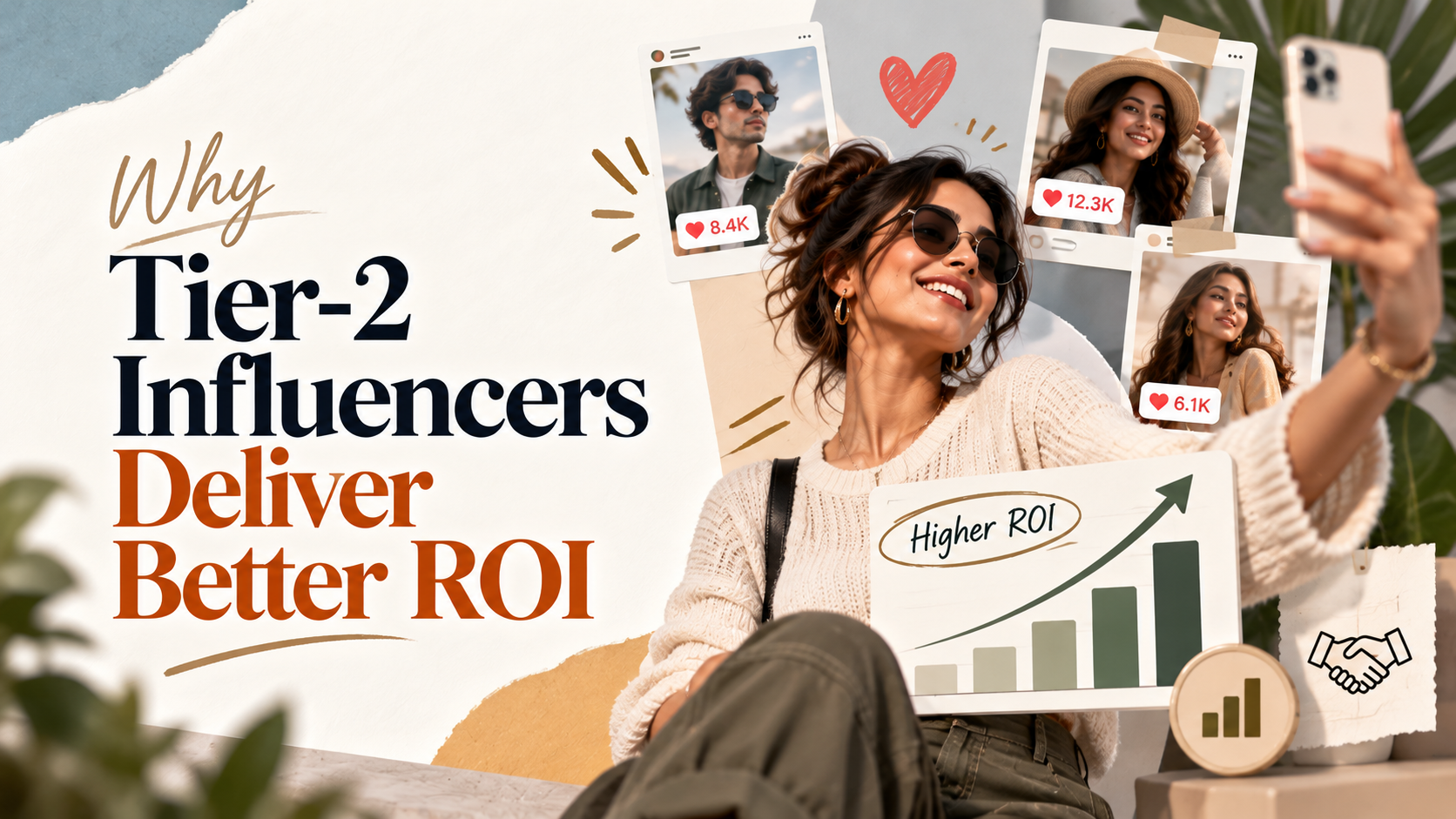
The most profitable influencer campaigns in India aren't happening in Mumbai, Delhi, or Bangalore anymore. They're happening in Jaipur, Lucknow, Chandigarh, and Indore. Tier-2 and Tier-3 city creators deliver 30-50% higher ROI than metro influencers, yet most brands still concentrate budgets in metropolitan centers.
This gap represents one of the biggest inefficiencies in Indian influencer marketing. While major brands obsess over follower counts from Delhi-based creators, tier-2 influencers are building authentic audiences with dramatically higher engagement and conversion rates. The data is clear. The opportunity is massive. Yet brands that ignore tier-2 and tier-3 cities are essentially ignoring where India's growth is happening.
India's influencer marketing industry crossed ₹5,000 crore, with tier-2 and tier-3 creators now driving the fastest growth. India's next 400 million internet users are coming from smaller cities and rural markets. This isn't a niche opportunity. It's where the majority of digital India is heading.
Why Tier-2 Creators Outperform Metro Influencers
The ROI advantage comes from three factors working together.
First, authenticity. Unlike metro creators catering to pan-Indian or global aesthetics, tier-2 and tier-3 influencers bring hyperlocal relevance to their content. A beauty creator in Jaipur understands Jaipur consumers' preferences, climate challenges, and cultural context in ways a Delhi creator simply cannot replicate. This authenticity translates into trust. Trust drives conversions.
Second, audience alignment. Metro influencers attract broad, often geographically dispersed followers. Tier-2 creators attract concentrated audiences from specific regions and cities. When your target market overlaps with the creator's actual audience, conversion efficiency increases dramatically. There's no waste. Every impression reaches someone likely to buy.
Third, lower acquisition costs paired with higher engagement. A tier-2 influencer with 50,000 followers costs significantly less than a metro influencer with similar reach, yet often delivers equal or higher engagement rates. This math favors brands hunting for ROI over vanity metrics.
The Vernacular Advantage
Regional language content now accounts for over 55% of total YouTube consumption in India. Hindi YouTube content grows 2.5x faster than English. Hindi, Tamil, Telugu, and Bengali content consumption increased 60% year-over-year. Yet most brands still brief creators exclusively in English.
The vernacular internet has unlocked creator-audience relationships of extraordinary depth in tier-2 and tier-3 cities. Audiences in these regions connect more powerfully with content in their native language. They trust regional creators more. They buy from brands promoted by regional creators at higher rates.
Brands that shifted budgets toward vernacular creators report immediate results. A D2C ethnic wear brand grew tier-2 revenue by 110% in eight months by combining regional WhatsApp campaigns, Hindi YouTube content, and regional creator partnerships. That tier-2 segment, previously ignored, became the brand's primary growth engine.
Where Tier-2 Audiences Actually Spend Time
Metro audiences consume content on Instagram, YouTube, and TikTok. Tier-2 and tier-3 audiences use Instagram and YouTube, but also heavily favor regional platforms. Josh reports 115 million monthly active users, with 60% from tier-2 and tier-3 cities. ShareChat reaches 350 million users. Moj is growing rapidly in smaller towns.
Additionally, these audiences are highly active on WhatsApp and YouTube in regional languages. A brand's influencer strategy targeting tier-2 cities that ignores these platforms is missing 70% of actual audience consumption.
The highest-impact channels in smaller cities are WhatsApp, regional-language YouTube, and vernacular platforms. Brands relying only on Instagram Reels reach tier-2 audiences inefficiently. Regional platforms deliver disproportionate ROI.
Tier-2 Influencers Aren't Cheaper; They're Better
This is the critical mindset shift. Brands shouldn't view tier-2 creators as budget alternatives to metro influencers. They're fundamentally different assets serving different audiences with different purchase behaviors.
A tier-2 creator with authentic audience connection in their city outperforms a metro creator with generic reach to dispersed followers. The ROI advantage isn't incidental. It's systematic. Brands choosing tier-2 creators based purely on lower cost miss the real value: audience fit and engagement quality.
The Competitive Advantage Window
Tier-2 influencer marketing is no longer emerging. It's competitive. But the brands that moved early captured the strongest creators before competition intensified. Those moving now still access high-quality partnerships at rational rates. Waiting another year means tier-2 creators will price like metro influencers, closing the ROI gap.
Category leaders in fashion, beauty, and food have already shifted significant budgets to tier-2. Brands in these categories that haven't followed are losing market share to competitors who recognized the opportunity earlier.
The Strategy Shift Required
Winning in tier-2 cities requires more than reallocating budgets. It requires rethinking product positioning, messaging, and creator selection. A product marketed one way in Delhi may need different messaging, packaging focus, or pricing strategy in Tier-2 cities. Creators can't simply repost metro brand content. They need autonomy to adapt messaging for regional relevance.
This means longer creator partnerships, deeper briefs, and willingness to let regional creators lead creative direction. Brands that dictate metro-tested creative to tier-2 creators fail. Brands that partner collaboratively with tier-2 creators win.
Building successful influencer campaigns in tier-2 and tier-3 cities requires strategic creator selection, regional positioning, and authentic partnership structures. This is where many brands struggle. Fame Keeda works with brands to identify high-performing regional creators, structure partnerships that respect local context, and build campaigns that drive measurable ROI in tier-2 markets. Whether you're expanding into new geographies or optimizing existing campaigns for higher returns, tier-2 influencer strategy separates market leaders from competitors still chasing metro metrics.