Most marketplace sellers spend on ads inside the marketplace. Costs per click keep climbing, and every competitor is bidding on the same keywords. Influencer marketing gives you a second route: bring shoppers to your listing from outside, already interested.
It works differently on each platform, though. Here is how to run it on Amazon, Flipkart and Meesho.
Why Marketplace Sellers Need Creators
Marketplaces now treat creators as part of their own ecosystems. YouTube's Shopping affiliate programme in India now includes Amazon, AJIO, Meesho, Snapdeal and Tata CLiQ, adding to existing partners like Flipkart, Myntra and Nykaa. Shoppers can tap a product tag inside a video and land on a listing.
Many sellers also believe external traffic helps their listings rank. Some marketplace sellers deliberately send external traffic from Meta, Google and influencer networks to their listings in order to trigger better conversion velocity and organic ranking. Marketplaces do not publish their ranking rules, so treat the ranking benefit as unconfirmed. The sales themselves are not in doubt.
How Each Marketplace Works With Creators
Amazon
The Amazon Influencer Program lets creators use affiliate links across WhatsApp, Telegram, Instagram and YouTube. For sellers, the key tool is Amazon Attribution. It is set up in Seller Central, is available to Brand Registered sellers only, and lets you create unique tracking links per influencer and monitor clicks, add-to-carts and purchases. If you are not brand registered yet, fix that before you spend on creators, or you will be flying blind.
Flipkart
Flipkart has leaned into creator-led shopping. YouTube's Shopping affiliate programme launched in India in October 2024 with Flipkart and Myntra, letting creators tag products directly in videos and Shorts. Flipkart's creator tools also let creators build shoppable content and storefronts. Check what the current seller-side options are inside your Flipkart seller dashboard, as programmes change often.
Meesho
Meesho runs creator commerce as a three-way marketplace. Products in creator videos are clickable so users can shop without leaving the content, and Live Shop sessions let sellers and influencers showcase products and drive instant sales. The scale is growing: Meesho reported a 152% year-on-year jump in net merchandise value through content commerce, with about 90% of active creators being nano-creators and 81% from non-metro India. If your product is value-priced and aimed at Tier 2 and 3 buyers, this is your platform.
Choosing Creators for Marketplace Products
Go small and specific. One seller guide suggests micro-influencers with 10K to 50K followers deliver the best return, at roughly ₹2,000 to ₹10,000 per post. Treat that as a starting range, not a fixed rate. Prices vary by category and city.
Match language and region. Regional creators speak to shoppers who trust a familiar voice. An Amazon India executive has said over 65% of orders on Amazon.in come from tier-2 cities and beyond. A Hindi, Tamil or Bengali creator in your category often beats a bigger English-language one.
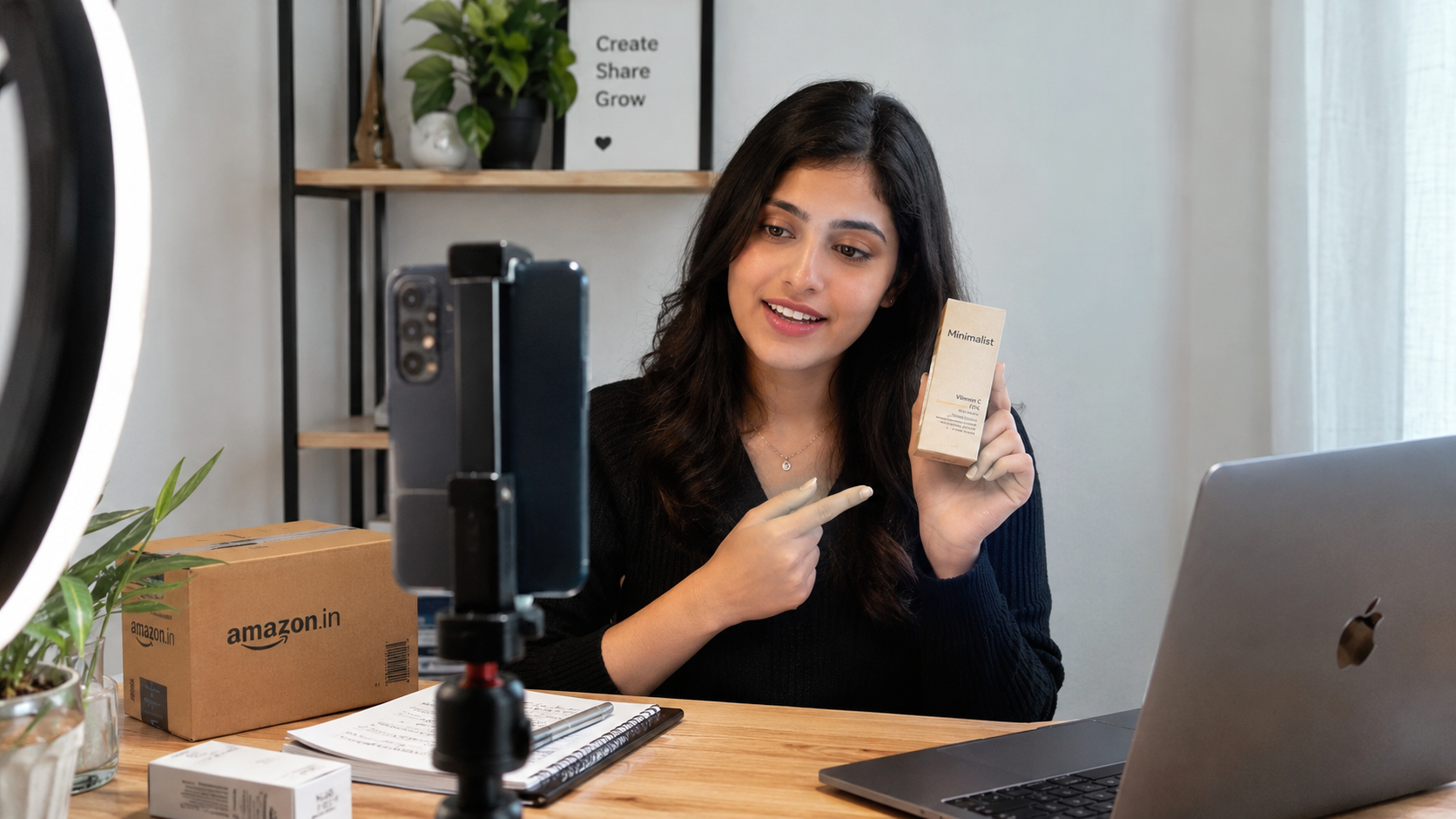
Pick formats that show the product working. Unboxings, demos, before-and-after clips, "haul" videos and comparison Reels suit marketplace products far better than polished brand films.
How to Set Up a Campaign
- Fix the listing first. Good images, reviews, a clear price and stock. Traffic to a weak listing wastes the creator's work.
- Give every creator a unique link. Use Amazon Attribution on Amazon, and tracked links or codes elsewhere, so you know who drove what.
- Brief for the buying moment. The video should end with a clear reason to click: a deal, a bundle, a limited offer.
- Time it with sales events. Align creator posts with your marketplace's sale days so traffic lands when conversion is highest.
- Disclose properly. Paid and affiliate posts must carry clear disclosure under ASCI guidelines.
Pricing Models: Flat Fee, Affiliate or Both
A flat fee pays for the post whether it sells or not. Affiliate commission pays only when a sale happens. Affiliate commerce is increasingly challenging flat-fee sponsorships, because it pays creators only when a transaction clears.
For most sellers, a hybrid works best: a smaller fixed fee for the creator's effort plus a commission or bonus on sales. It keeps your risk low and the creator motivated.
Common Mistakes
- Sending traffic to a listing with poor reviews or no stock.
- Using one shared link for all creators, so nothing can be measured.
- Chasing follower count instead of audience fit.
- Running a single post instead of a short series. Repetition builds trust.
- Ignoring returns data. A creator who drives sales but also returns can cost you more than you think.
What to Measure
Look past views. Track clicks, add-to-carts, orders, conversion rate and cost per order for each creator. Then compare creators against each other and against your marketplace ad costs. Put more budget behind creators who deliver orders at a lower cost than your in-marketplace ads, and drop the rest.
Run Marketplace Campaigns With Fame Keeda
Marketplace selling rewards sellers who treat creators as a sales channel, not a branding exercise. Fame Keeda helps sellers find the right nano and micro creators by category and language, set up trackable links, structure fee and commission deals, and report on orders rather than views. If you sell on Amazon, Flipkart or Meesho, talk to Fame Keeda about a creator plan that fits your margins.