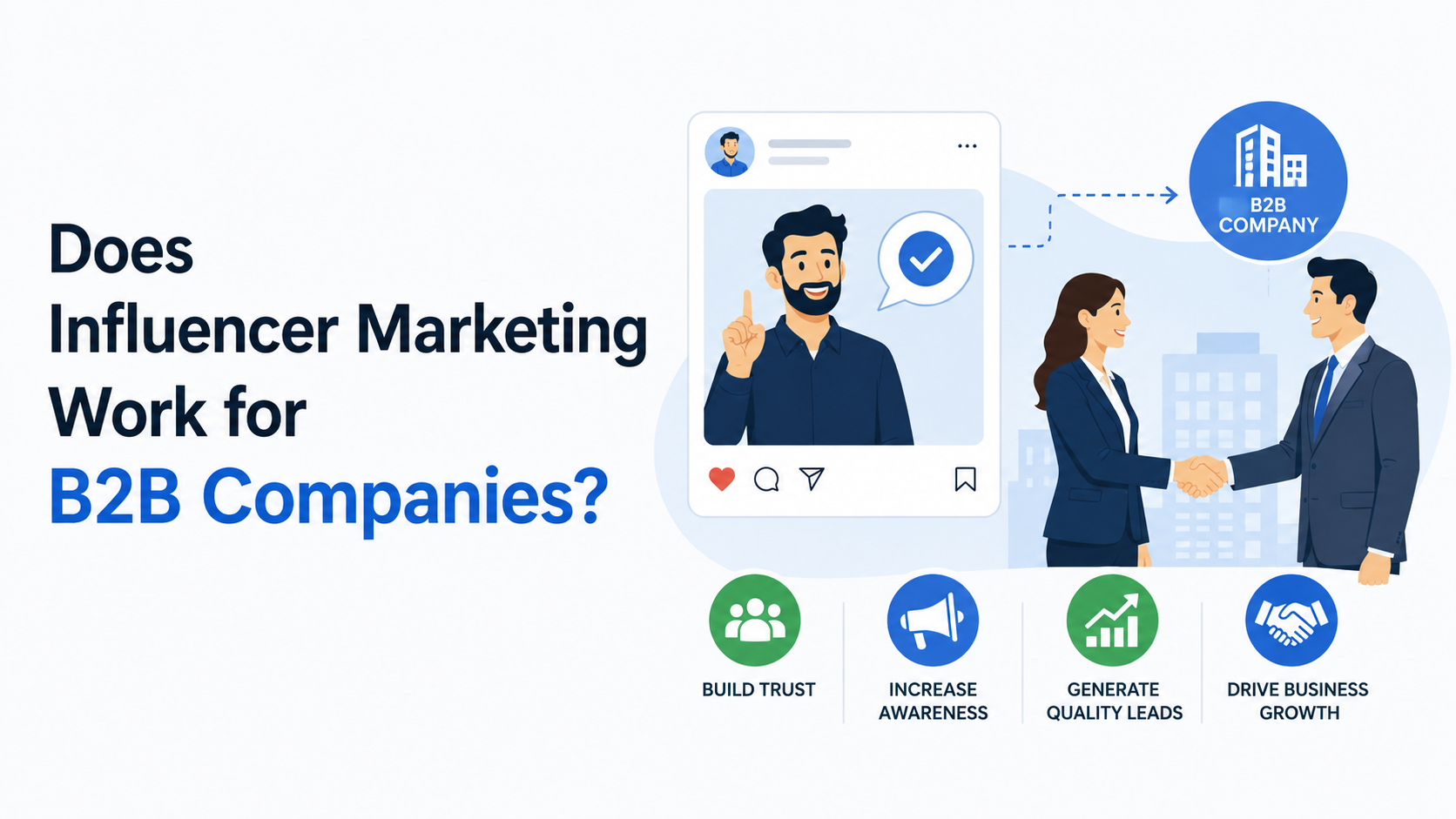
When people think of influencer marketing, they often picture fashion brands, beauty products, fitness creators, or lifestyle influencers promoting consumer goods on social media. However, influencer marketing is no longer limited to B2C brands. In recent years, B2B influencer marketing has emerged as a highly effective strategy for companies looking to build credibility, generate leads, and accelerate business growth.
So, does influencer marketing work for B2B companies? The answer is a resounding yes. In fact, as decision-makers increasingly rely on digital content for research and purchasing decisions, influencer marketing has become one of the most powerful tools in the B2B marketing arsenal.
What Is B2B Influencer Marketing?
B2B influencer marketing involves partnering with industry experts, thought leaders, consultants, executives, analysts, and niche content creators who have influence over business audiences.
Unlike B2C influencer marketing, which often focuses on product promotion and consumer engagement, B2B influencer marketing is centered around:
- Building trust
- Sharing expertise
- Educating prospects
- Generating qualified leads
- Establishing industry authority
B2B influencers may operate on platforms such as LinkedIn, YouTube, X (formerly Twitter), podcasts, blogs, newsletters, and industry communities.
Why Influencer Marketing Works for B2B Companies
1. Business Buyers Trust Industry Experts
Today's B2B buyers conduct extensive research before making purchasing decisions. According to multiple industry studies, decision-makers often consume educational content, reviews, case studies, and expert opinions before contacting a vendor.
When an industry influencer recommends a solution or shares insights about a product, their audience is more likely to trust the information than traditional advertising.
This trust can significantly shorten the buyer journey and improve conversion rates.
2. B2B Purchase Decisions Are Complex
Unlike consumer purchases, B2B buying decisions often involve:
- Multiple stakeholders
- Longer sales cycles
- Higher budgets
- Extensive evaluation processes
Influencers help simplify complex products and services by explaining them in practical, relatable ways.
For example, a SaaS influencer can demonstrate how a CRM platform improves sales productivity, making it easier for potential buyers to understand the value proposition.
3. Reaches Highly Targeted Audiences
One of the greatest strengths of B2B influencer marketing is precision targeting.
Companies can collaborate with influencers specializing in:
- Technology
- SaaS
- Fintech
- Healthcare
- Manufacturing
- Human Resources
- Marketing
- Cybersecurity
- Real Estate
This ensures your message reaches professionals who are genuinely interested in your solutions.
4. Creates High-Value Content
B2B influencers often produce educational and thought-leadership content that provides long-term value.
Popular formats include:
- Webinars
- Podcasts
- Product reviews
- LinkedIn articles
- Case studies
- Industry reports
- Expert interviews
- YouTube tutorials
This content not only generates leads but also strengthens your brand's authority within the industry.
Best Types of Influencers for B2B Companies
Industry Thought Leaders
These experts have established credibility through years of experience and professional achievements.
Their recommendations carry significant weight among business audiences.
LinkedIn Influencers
LinkedIn has become the leading platform for B2B influencer marketing. Business professionals actively engage with industry insights, making it ideal for thought leadership campaigns.
Subject Matter Experts
Consultants, analysts, and practitioners often have highly engaged niche audiences and can effectively explain complex products and services.
Podcast Hosts
Many decision-makers regularly consume business podcasts. Sponsorships and guest appearances can help brands reach highly qualified prospects.
Micro Influencers
Micro influencers may have smaller followings, but they often generate higher engagement and stronger audience trust within specific industries.
Effective B2B Influencer Marketing Strategies
Educational Webinars
Collaborate with industry experts to host webinars addressing common challenges and showcasing solutions.
Webinars are excellent for lead generation and audience engagement.
Product Demonstrations
Influencers can explain features, benefits, and real-world applications of your products through detailed walkthroughs.
Expert Roundtables
Invite multiple industry influencers to discuss market trends, challenges, and opportunities.
This positions your company as a leader in industry conversations.
Thought Leadership Content
Partner with influencers to create blogs, reports, whitepapers, and LinkedIn content that educate and inform your target audience.
Podcast Collaborations
Guest appearances on relevant business podcasts can significantly increase brand awareness among decision-makers.
Measuring Success
To evaluate campaign performance, track metrics such as:
- Website traffic
- Lead generation
- Webinar registrations
- Demo requests
- Content engagement
- Conversion rates
- Customer acquisition cost (CAC)
- Return on investment (ROI)
These KPIs help determine which influencers and content formats drive the best business outcomes.
Common Mistakes to Avoid
Choosing Influencers Based on Follower Count
In B2B marketing, expertise and audience quality matter far more than reach.
Treating B2B Like B2C
Business buyers want education and insights, not overly promotional content.
Ignoring Long-Term Partnerships
Ongoing collaborations often generate greater trust and stronger results than one-time campaigns.
Lack of Performance Tracking
Without clear KPIs, it becomes difficult to measure ROI and optimize future campaigns.
The Future of B2B Influencer Marketing
As buyers increasingly seek peer recommendations and expert guidance online, influencer marketing will continue to grow as a key B2B strategy. Platforms like LinkedIn, YouTube, newsletters, podcasts, and professional communities are becoming essential channels for influencing purchase decisions.
Companies that invest in authentic influencer relationships and educational content will gain a significant competitive advantage in the years ahead.
Conclusion
So, does influencer marketing work for B2B companies? Absolutely. When executed strategically, B2B influencer marketing can build trust, educate prospects, generate qualified leads, and accelerate revenue growth.
The key is partnering with credible industry experts who align with your audience and business objectives. In a marketplace where trust and expertise drive purchasing decisions, influencer marketing is no longer just a trend it's a proven growth strategy for modern B2B companies.
CTA
Ready to Scale Your B2B Brand with Influencer Marketing?
At Fame Keeda, we help B2B companies connect with industry thought leaders, LinkedIn influencers, and niche experts who drive real business results. From influencer discovery and campaign strategy to content creation and performance tracking, we manage every aspect of your B2B influencer marketing journey.