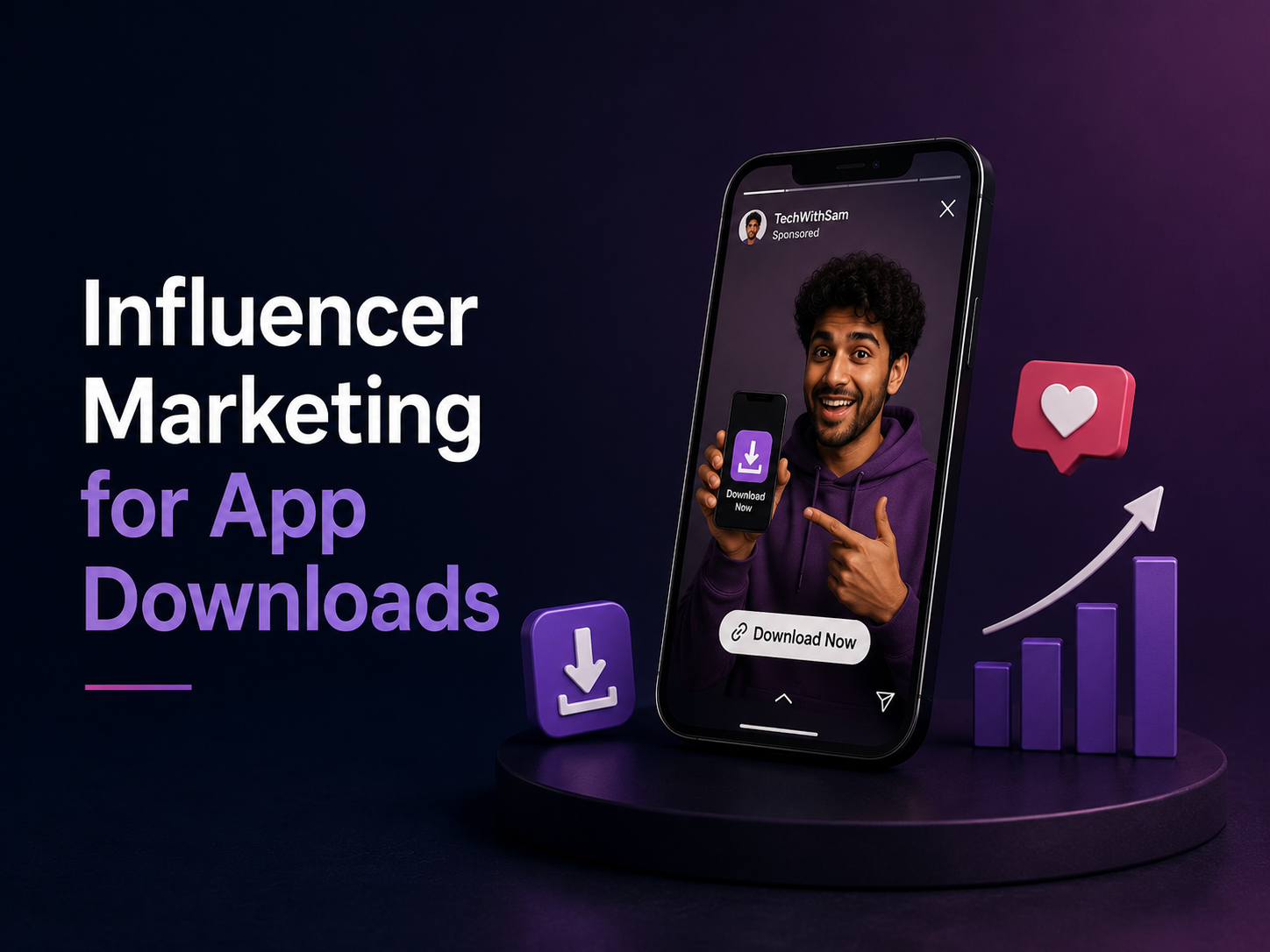
Can influencers help brands get more app downloads than traditional advertising? For many businesses, the answer is yes. As competition in the app market continues to increase, simply launching an application is no longer enough. Brands need effective strategies to attract users, build trust, and convince people to install and use their apps.
Influencer marketing has become a powerful user acquisition channel because creators can introduce apps through authentic demonstrations, personal experiences, tutorials, and recommendations. Instead of asking users to download an app through a traditional advertisement, influencers show how the app solves real problems in everyday situations.
From fintech and gaming apps to fitness, education, shopping, and entertainment platforms, businesses are increasingly using influencer partnerships to generate quality app installs and build long-term user relationships.
Why App Brands Are Investing in Influencer Marketing
The mobile app industry has become highly competitive. Thousands of applications compete for user attention, making customer acquisition one of the biggest challenges for app companies.
Traditional advertising can generate visibility, but users often hesitate before downloading an unfamiliar app. They want proof that the application is reliable, useful, and worth their time.
Influencers help solve this challenge by providing social proof. When audiences see a trusted creator using and recommending an app, they are more likely to consider downloading it.
Influencer marketing combines awareness, trust, and product education, making it especially effective for app growth.
How Influencers Drive App Downloads
Influencers can promote mobile applications in several ways depending on the campaign objective and target audience.
Product Demonstrations
Creators can showcase how the app works through tutorials, walkthrough videos, and real-life examples. This helps potential users understand the app's value before downloading it.
Personal Recommendations
When influencers share their personal experience with an application, audiences often perceive the recommendation as more authentic compared to a traditional advertisement.
Challenges and Campaigns
Brands can create engaging campaigns where influencers encourage followers to participate, download the app, and complete specific actions.
Exclusive Offers
Discount codes, referral bonuses, and limited-time benefits can encourage audiences to take immediate action.
Choosing the Right Influencers for App Promotion
The success of an app influencer campaign depends heavily on selecting creators who match the target audience.
A large following does not always guarantee better results. The ideal influencer should have an audience that aligns with the app's users and a strong relationship with their community.
Important selection factors include:
| Factor | Why It Matters |
|---|---|
| Audience relevance | Ensures the app reaches potential users. |
| Engagement rate | Shows how actively followers interact with content. |
| Content quality | Determines how effectively the app is presented. |
| Creator credibility | Builds trust with potential users. |
| Previous campaign performance | Helps predict future results. |
A finance app may benefit from personal finance creators, while a gaming app may perform better through gaming influencers.
Micro Influencers Can Deliver Strong App Growth
Many brands assume that only celebrity influencers can generate large numbers of downloads. However, micro influencers often deliver stronger results because they have highly engaged and niche audiences.
A creator with 50,000 followers in a specific category may influence more relevant users than a general influencer with millions of followers.
Micro influencers are especially effective for:
- Finance applications
- Health and fitness apps
- Education platforms
- Productivity tools
- Local service apps
- Niche communities
Their recommendations often feel more personal and trustworthy.
Creating High-Converting Influencer App Campaigns
A successful influencer campaign requires more than simply asking creators to mention an app. The content should clearly communicate why users should download it.
Effective app campaigns usually include:
| Campaign Element | Purpose |
| Clear value proposition | Explains why users need the app. |
| Demonstration content | Shows how the app works. |
| Strong call to action | Encourages downloads. |
| Tracking links | Measures campaign performance. |
| Incentives | Provides additional motivation. |
The best-performing campaigns focus on education and storytelling rather than direct promotion.
Measuring Influencer Marketing Success for App Downloads
Unlike traditional brand awareness campaigns, app influencer campaigns can be measured through specific performance metrics.
Important metrics include:
| Metric | Purpose |
| App installs | Measures the number of downloads generated. |
| Cost per install | Calculates acquisition efficiency. |
| Activation rate | Tracks users who complete key actions. |
| Retention rate | Measures long-term user engagement. |
| Referral usage | Tracks influencer-driven conversions. |
| Revenue generated | Evaluates business impact. |
These insights help brands identify which creators and content formats deliver the highest return.
Combining Influencer Marketing With Paid User Acquisition
Influencer marketing and paid advertising can work together to maximize app growth.
Influencers create authentic content that builds trust, while paid ads provide scalable distribution. Brands can also use high-performing influencer content as advertising creatives to improve campaign performance.
This combination allows businesses to benefit from both human connection and data-driven targeting.
Common Mistakes Brands Should Avoid
Many app companies make the mistake of selecting influencers only based on follower count. This can lead to high visibility but poor-quality downloads.
Another mistake is focusing only on installs without measuring user quality. Thousands of downloads have limited value if users do not continue using the application.
Brands should also avoid overly scripted influencer content. Audiences respond better when creators communicate naturally in their own style.
Influencer Marketing for Different Types of Apps
Different app categories require different influencer strategies.
| App Category | Effective Influencer Approach |
| Gaming apps | Gameplay videos, challenges, live streams |
| Finance apps | Educational content and expert creators |
| Fitness apps | Transformation stories and workout content |
| Education apps | Tutorials and learning demonstrations |
| Shopping apps | Product discovery and reviews |
| Travel apps | Experience-based storytelling |
Understanding audience behavior is essential for creating effective campaigns.
The Future of Influencer-Led App Growth
As app competition increases, brands will continue looking for marketing channels that combine trust with measurable performance. Influencer marketing offers both by connecting businesses with communities through authentic recommendations.
Future app growth strategies will focus on creator partnerships, performance tracking, community building, and personalized campaigns.
Brands that treat influencers as strategic growth partners rather than promotional channels will have a stronger advantage.
How Fame Keeda Helps Brands Drive App Downloads Through Influencer Marketing
At Fame Keeda, we help businesses build influencer campaigns designed to increase app visibility, user acquisition, and engagement. Our team identifies relevant creators, develops campaign strategies, manages collaborations, and tracks performance to ensure measurable results.
Whether you are launching a new application or scaling an existing platform, we help connect your brand with influencers who can influence real user decisions.
Conclusion
Influencer marketing has become a powerful strategy for driving app downloads because it combines trust, storytelling, and audience engagement. Unlike traditional advertising, influencer campaigns allow users to understand an app through authentic experiences and recommendations.
However, successful app growth requires the right creators, clear messaging, performance tracking, and a strategy focused on quality users rather than just download numbers.
As the app ecosystem becomes more competitive, brands that leverage influencer communities effectively will have a stronger opportunity to attract, engage, and retain valuable users.