As brands compete for attention in an increasingly crowded digital landscape, authenticity has become one of the most valuable assets in marketing. Two strategies that help brands build trust and connect with consumers are User-Generated Content (UGC) and Influencer Marketing. While these terms are often used interchangeably, they serve different purposes and deliver different outcomes.
Understanding the difference between UGC and influencer marketing can help brands choose the right strategy or combine both for maximum impact.
What Is User-Generated Content (UGC)?
User-Generated Content refers to any content created by customers, users, or fans of a brand rather than the brand itself. This content can include:
- Product reviews
- Testimonials
- Social media posts
- Unboxing videos
- Photos featuring a product
- Customer success stories
UGC is typically created by people who have genuinely used a product or service and want to share their experiences. Because it comes from real customers, audiences often perceive UGC as more authentic and trustworthy than traditional advertising.
Benefits of UGC
- Builds consumer trust
- Provides social proof
- Encourages community engagement
- Generates authentic content
- Cost-effective compared to traditional advertising
For example, when a customer posts a photo wearing a fashion brand's clothing and tags the brand on Instagram, that content becomes UGC.
What Is Influencer Marketing?
Influencer marketing involves partnering with content creators who have established audiences on platforms such as Instagram, YouTube, TikTok, LinkedIn, or Facebook.
Brands collaborate with influencers to promote products, services, or campaigns through sponsored content.
Influencers can range from:
- Nano influencers (1K–10K followers)
- Micro influencers (10K–100K followers)
- Macro influencers (100K–1M followers)
- Mega influencers (1M+ followers)
Unlike UGC creators, influencers are often compensated through payments, free products, affiliate commissions, or brand partnerships.
Benefits of Influencer Marketing
- Expands brand reach
- Increases awareness quickly
- Targets specific audiences
- Generates engagement
- Drives conversions and sales
Influencers leverage their credibility and relationship with followers to introduce brands to new audiences.
Key Differences Between UGC and Influencer Marketing
1. Content Creator
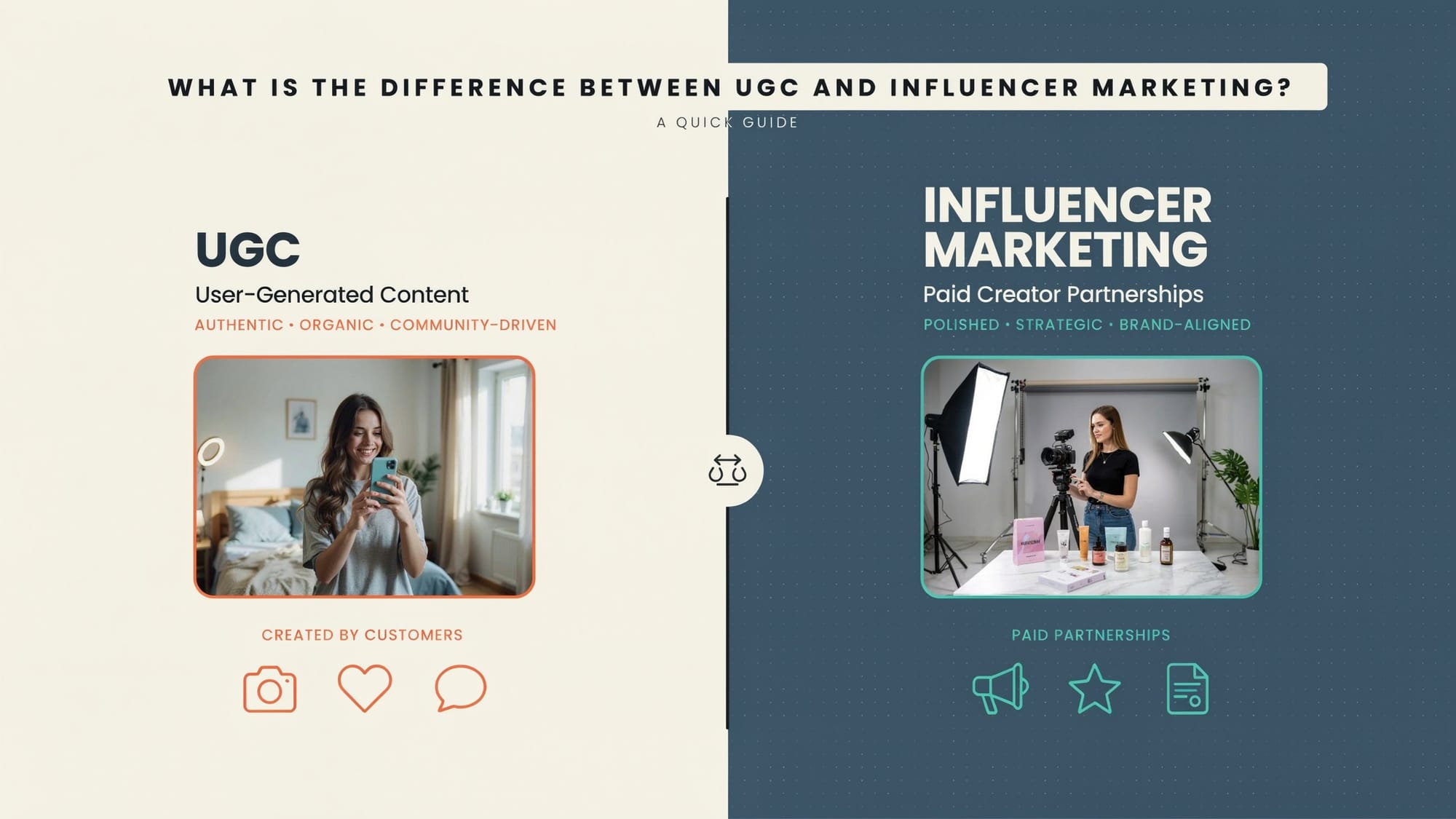
UGC: Created by actual customers or users.
Influencer Marketing: Created by influencers with established audiences.
The primary difference lies in who creates the content and their relationship with the brand.
2. Audience Reach
UGC: Usually reaches a smaller audience unless the brand amplifies it.
Influencer Marketing: Designed to reach the influencer's existing follower base.
Brands often use influencers specifically because of their audience size and engagement.
3. Cost
UGC: Often free or relatively low-cost.
Influencer Marketing: Typically requires compensation based on follower count, engagement, niche, and deliverables.
For brands with limited budgets, UGC can be an affordable way to collect authentic content.
4. Trust and Authenticity
UGC: Viewed as highly authentic because it comes from real customers.
Influencer Marketing: Can also be trusted when influencers genuinely align with the brand, but sponsored partnerships may sometimes be viewed as promotional.
Consumers often rely on UGC when making purchasing decisions because it reflects real-life experiences.
5. Marketing Goals
UGC Works Best For:
- Building trust
- Creating social proof
- Strengthening customer relationships
- Supporting conversion campaigns
Influencer Marketing Works Best For:
- Increasing brand awareness
- Reaching new audiences
- Driving traffic
- Launching products
- Generating leads and sales
Can Brands Use Both Together?
Absolutely. In fact, the most successful brands often combine UGC and influencer marketing.
A common strategy is to:
- Partner with influencers to create awareness.
- Encourage customers to share their experiences.
- Repurpose UGC across websites, ads, emails, and social media.
This approach creates a powerful marketing funnel where influencer content generates interest, and UGC reinforces trust before purchase.
For example, a beauty brand may work with influencers to showcase a new skincare product while simultaneously featuring customer reviews and user-created videos on product pages.
Which Strategy Is Better?
The answer depends on your objectives.
Choose UGC if you want:
- Authentic customer testimonials
- Cost-effective content creation
- Social proof for conversion optimization
Choose Influencer Marketing if you want:
- Wider reach
- Faster brand awareness
- Access to targeted audiences
- Product launch support
For most brands, a combination of both delivers the strongest results. Influencers help attract attention, while UGC helps convert that attention into trust and sales.
Conclusion
Although UGC and influencer marketing share similarities, they are not the same. UGC focuses on authentic customer experiences, while influencer marketing leverages creators with established audiences to promote brands. Both strategies offer unique benefits and can play important roles in a modern marketing strategy.
Brands that successfully integrate influencer campaigns with genuine user-generated content can build stronger relationships, increase credibility, and achieve better long-term marketing results.
CTA
Ready to Build a High-Impact Influencer Marketing Strategy?
At Fame Keeda, we help brands connect with the right influencers while creating campaigns that inspire authentic user-generated content. From influencer discovery and campaign management to performance tracking and content amplification, our team ensures your brand gets maximum visibility and engagement.