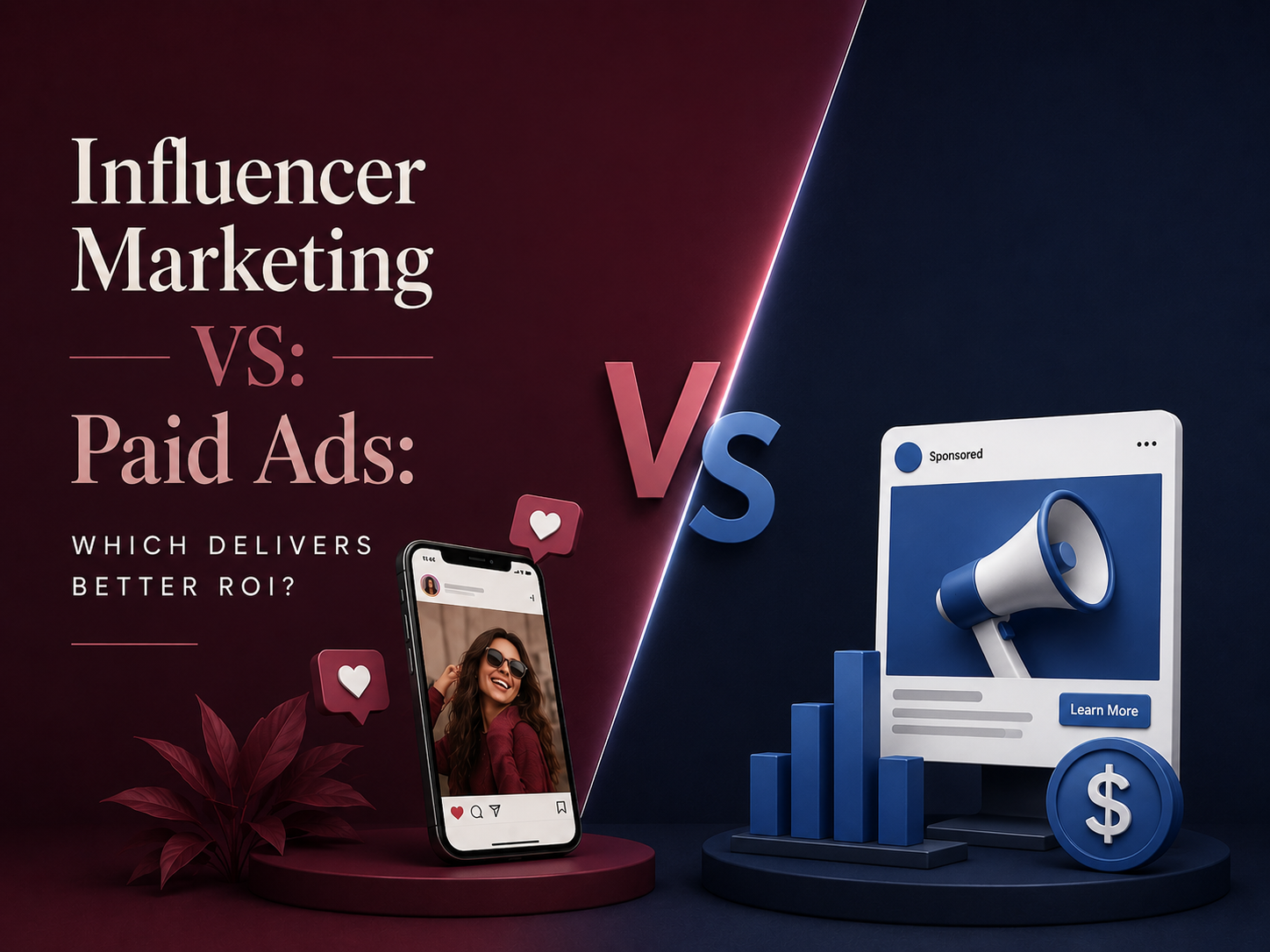
Should brands invest more in influencer marketing or paid advertising? This is one of the most common questions marketers face today. Both strategies can help businesses increase visibility, attract customers, and drive revenue, but they work differently.
Paid advertising focuses on reaching targeted audiences through platforms such as Google Ads, Meta Ads, and other digital advertising networks. Influencer marketing uses trusted creators to introduce products and services through authentic recommendations and community-driven content.
The better option depends on the brand's objectives, audience, industry, and campaign goals. While paid ads provide control and scalability, influencer marketing creates trust and emotional connections that traditional advertising often struggles to achieve.
In 2026, many successful brands are no longer choosing between the two. They are combining influencer marketing and paid advertising to maximize reach, credibility, and conversions.
Understanding Influencer Marketing and Paid Ads
Before comparing ROI, it is important to understand how both strategies work.
Influencer marketing involves partnering with creators who have established relationships with specific audiences. These influencers promote a brand through content such as videos, reviews, tutorials, social media posts, live sessions, and product demonstrations.
Paid advertising involves paying platforms to display advertisements to selected audiences based on factors such as demographics, interests, search behavior, and online activity.
Both approaches aim to influence customer decisions, but the way they build connections is different.
How Influencer Marketing Creates Value
Influencer marketing works because people trust recommendations from individuals they follow and relate to. A creator who has built credibility within a niche community can influence purchasing decisions through authentic storytelling.
Instead of directly telling customers why they should buy a product, influencers demonstrate how a product fits into real-life experiences.
For example, a skincare creator sharing their personal experience with a product can often create more trust than a standard advertisement highlighting product features.
The major strengths of influencer marketing include:
- Higher audience trust
- Stronger emotional connections
- Authentic product demonstrations
- Community engagement
- Long-term brand awareness
How Paid Ads Create Value
Paid advertising remains one of the most effective ways for businesses to reach targeted customers quickly. Platforms provide advanced targeting options that allow brands to show advertisements based on user behavior, location, interests, and search intent.
Paid campaigns are especially useful for businesses that need immediate traffic, lead generation, or sales.
The key benefits of paid advertising include:
- Fast audience reach
- Precise targeting options
- Budget control
- Easy performance tracking
- Campaign scalability
However, as consumers become more exposed to advertisements, competition and advertising costs continue to increase.
Influencer Marketing vs Paid Ads: Key Differences
| Factor | Influencer Marketing | Paid Ads |
|---|---|---|
| Trust | Builds trust through creator relationships | Relies on brand messaging |
| Speed | Requires time for creator selection and content creation | Can generate immediate traffic |
| Audience Connection | Creates personal engagement | Creates targeted exposure |
| Content Lifespan | Content may continue generating value over time | Stops when the budget ends |
| Targeting | Based on creator audience relevance | Based on platform targeting tools |
| Cost Control | Pricing varies by creator and campaign | Controlled through advertising budget |
| Brand Awareness | Strong for storytelling and credibility | Strong for visibility and reach |
| Conversion Tracking | Requires proper measurement setup | Advanced tracking available |
Both channels have unique advantages depending on campaign objectives.
Which Strategy Delivers Better ROI?
There is no universal answer because ROI depends on what a brand wants to achieve.
For businesses focused on immediate conversions, paid advertising can deliver faster results. Brands can launch campaigns, target specific audiences, and measure performance quickly.
For businesses focused on trust, awareness, and long-term customer relationships, influencer marketing often provides stronger value. A trusted creator recommendation can continue influencing audiences even after the campaign ends.
The strongest ROI often comes from using both strategies together.
Why Influencer Marketing Often Builds Stronger Trust
Consumers have become increasingly selective about advertisements. Many people skip ads, use ad blockers, or ignore promotional messages because they encounter thousands of marketing messages daily.
Influencer marketing works differently because it is integrated into content audiences already enjoy. When the partnership feels authentic, consumers perceive the recommendation as more personal and reliable.
This trust can improve brand perception, customer loyalty, and purchase confidence.
Why Paid Ads Remain Essential
While influencer marketing creates trust, paid advertising provides scale and control. A great influencer campaign can generate awareness and engagement, but paid ads allow brands to reach specific audiences repeatedly and optimize performance based on real-time data.
Paid advertising is especially effective for:
- Retargeting website visitors
- Promoting high-performing influencer content
- Driving immediate sales
- Testing different marketing messages
- Scaling successful campaigns
The ability to measure and optimize quickly makes paid ads an important part of modern marketing strategies.
The Power of Combining Influencer Marketing With Paid Ads
The most effective brands use influencer content as a foundation for paid campaigns.
For example, a brand can collaborate with influencers to create authentic product videos and then use those videos as paid advertisements. This approach combines the trust of influencer content with the targeting capabilities of paid media.
Benefits of combining both strategies include:
- Improved ad performance
- Stronger audience trust
- Better content efficiency
- Increased conversion opportunities
- More effective retargeting campaigns
This integrated approach creates a complete customer journey from awareness to purchase.
Measuring Influencer Marketing ROI
To understand influencer campaign performance, brands should track more than likes and views.
Important metrics include:
| Metric | Purpose |
| Engagement rate | Measures audience interaction. |
| Website traffic | Tracks visitors generated from campaigns. |
| Conversion rate | Measures sales or leads generated. |
| Brand mentions | Shows increased awareness. |
| Customer acquisition cost | Evaluates campaign efficiency. |
| Return on investment | Measures financial performance. |
Clear objectives and proper tracking are essential for evaluating influencer marketing success.
Common Mistakes Brands Make
One common mistake is choosing influencers only based on follower count. A large audience does not always mean strong influence or relevant customers.
Another mistake is expecting immediate sales from every influencer campaign. Influencer marketing often plays an important role in awareness, trust-building, and customer consideration before conversion.
Similarly, businesses should avoid relying only on paid ads without building brand credibility. Advertising can generate clicks, but trust is what helps convert customers into loyal buyers.
The Future of Brand Growth: Influence Combined With Performance
The future of marketing will not be about choosing influencer marketing over paid advertising or vice versa. Successful brands will understand how both channels complement each other.
Influencer marketing creates human connections and brand trust. Paid advertising provides scalability and measurable performance. Together, they create a powerful marketing ecosystem.
Brands that combine authentic creator partnerships with data-driven advertising strategies will be better positioned to achieve sustainable growth.
How Fame Keeda Helps Brands Maximize Influencer Marketing ROI
At Fame Keeda, we help brands create influencer marketing campaigns that deliver meaningful business outcomes. From influencer discovery and campaign strategy to content execution and performance measurement, our team focuses on connecting brands with creators who genuinely influence their target audiences.
We help businesses move beyond vanity metrics and build campaigns focused on trust, engagement, and measurable growth.
Conclusion
Influencer marketing and paid advertising are not competing strategies. They solve different marketing challenges and deliver value at different stages of the customer journey.
Paid ads provide speed, targeting, and scalability, while influencer marketing builds trust, authenticity, and community connections. The right choice depends on business goals, audience behavior, and campaign objectives.
In 2026, brands that combine the credibility of influencers with the performance capabilities of paid advertising will have a stronger advantage in building awareness, driving conversions, and creating long-term customer relationships.