Are follower counts still the most important factor in influencer marketing? Increasingly, the answer is no. While a large audience can create visibility, brands are discovering that influence is not measured only by the number of followers an individual has. The real value lies in the relationship between creators and their communities.
Modern consumers are more aware of advertising and can easily recognize promotional content that feels disconnected or inauthentic. They trust creators who consistently engage with their audience, understand their interests, and provide recommendations that feel genuine.
As a result, brands are shifting their focus from follower numbers to community strength. They are prioritizing influencers who can create conversations, build trust, and influence purchasing decisions within specific audience groups.
The Shift From Audience Size to Audience Quality
For years, influencer marketing campaigns were heavily focused on reach. Brands often selected influencers based on follower counts, assuming that larger audiences would automatically deliver better results.
However, follower numbers do not always represent real influence. Some accounts may have inactive audiences, low engagement, or followers who do not match the brand's target customers.
Today, businesses are looking deeper into metrics such as engagement rate, audience demographics, content quality, trust, and community interaction. A creator with a smaller but highly engaged audience can often deliver better results than an influencer with millions of followers but limited audience connection.
What Makes a Community More Valuable Than Followers?
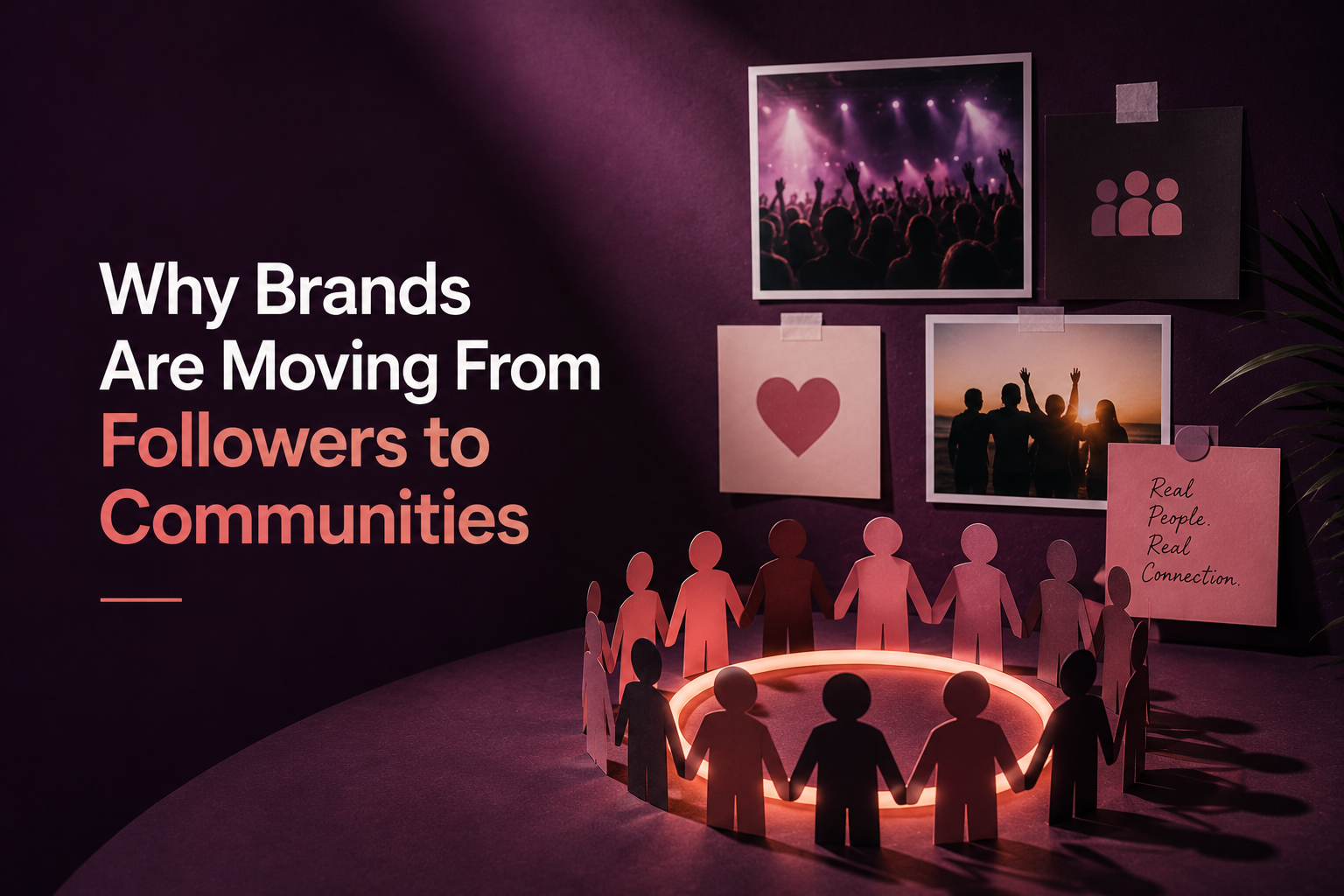
A community is built through ongoing interaction, shared interests, and emotional connections. Unlike passive followers, community members actively participate through comments, discussions, recommendations, and conversations.
Communities create stronger marketing opportunities because they are based on trust. When a creator recommends a product within a community that values their opinion, the recommendation feels more like advice from a trusted source rather than a traditional advertisement.
| Followers | Community |
|---|---|
| Focus on audience size | Focus on audience relationships |
| Passive content consumption | Active conversations and engagement |
| Measured mainly through reach | Measured through trust and interaction |
| Short-term visibility | Long-term brand influence |
| General audience | Shared interests and values |
This shift is changing how brands evaluate influencer partnerships.
Why Consumers Trust Communities More
Consumers today have access to unlimited information. Before purchasing a product, they research reviews, watch demonstrations, compare opinions, and seek recommendations from people they trust.
Creator communities provide this social validation. When audiences see real discussions, experiences, and feedback around a product, they develop greater confidence in their purchasing decisions.
This is especially important for categories such as beauty, fashion, technology, fitness, food, and lifestyle, where personal recommendations strongly influence buying behavior.
Engagement Is Becoming More Important Than Reach
Reach is still valuable for creating awareness, but engagement reveals whether an audience is genuinely interested in the content.
Comments, conversations, shares, saves, direct messages, and audience feedback provide deeper insights into the strength of a creator's influence.
Brands are increasingly analyzing these signals to identify creators who can generate meaningful interactions rather than just impressions.
A campaign that creates conversations often delivers stronger long-term impact than one that only generates views.
Micro and Niche Influencers Are Driving Community-Based Marketing
The rise of micro and niche influencers has accelerated the move toward community-driven marketing. These creators often focus on specific topics and build strong relationships with audiences who share similar interests.
For example, a fitness creator with 50,000 highly engaged followers may influence health-conscious consumers more effectively than a general lifestyle influencer with one million followers.
Niche communities allow brands to reach highly relevant audiences while creating more authentic partnerships.
How Brands Can Build Community-Led Influencer Campaigns
Successful community-driven influencer marketing requires a different approach from traditional influencer campaigns.
Brands should focus on finding creators who naturally align with their values and understand their target customers. Instead of controlling every aspect of content creation, businesses should allow creators to communicate with their audience in an authentic way.
Long-term partnerships, ambassador programs, community discussions, and user-generated content initiatives can help brands build stronger relationships with consumers.
The Role of Influencers Is Changing
Influencers are no longer just content distributors. They are becoming community leaders, trusted advisors, and brand advocates.
A creator's ability to influence purchasing decisions depends on their credibility and relationship with their audience. This means brands need to evaluate influencers based on their ability to create meaningful connections rather than simply their popularity.
The future of influencer marketing belongs to creators who can build loyal communities around shared interests and values.
Measuring Community-Based Influencer Marketing Success
As brands move away from follower-based evaluation, measurement strategies are also evolving.
Important performance indicators now include:
| Metric | Importance |
| Engagement quality | Measures meaningful audience interaction. |
| Sentiment analysis | Shows how audiences perceive the brand. |
| Conversion rate | Measures actual business impact. |
| Community growth | Tracks long-term audience development. |
| Repeat engagement | Shows ongoing audience interest. |
| Brand mentions | Indicates organic conversations. |
These metrics provide a clearer understanding of influencer marketing effectiveness.
The Future of Influencer Marketing Is Community-Driven
The creator economy is moving toward deeper relationships between influencers, brands, and audiences. As digital advertising becomes more competitive, trust will become one of the strongest advantages a brand can build.
Businesses that focus only on follower counts may achieve temporary visibility, but brands that invest in communities can create stronger loyalty, advocacy, and long-term growth.
Influencer marketing is becoming less about reaching the largest audience and more about connecting with the right audience.
How Fame Keeda Helps Brands Build Community-Driven Influencer Campaigns
At Fame Keeda, we help brands move beyond traditional influencer marketing by creating strategic partnerships with creators who genuinely connect with their audiences. Our approach focuses on finding the right influencers, developing authentic campaigns, and building relationships that drive meaningful engagement.
From influencer discovery and campaign management to content strategy and performance analysis, we help brands create influencer marketing campaigns that generate trust, conversations, and measurable business results.
Conclusion
The future of influencer marketing is not defined by follower counts. It is defined by trust, relevance, and community connection. Brands are realizing that a smaller group of highly engaged people can often create more impact than a large audience with limited interaction.
As consumers continue to value authenticity, community-driven influencer marketing will become a key strategy for brands looking to build stronger relationships and achieve sustainable growth.
The brands that succeed will be those that stop chasing numbers and start building meaningful connections.